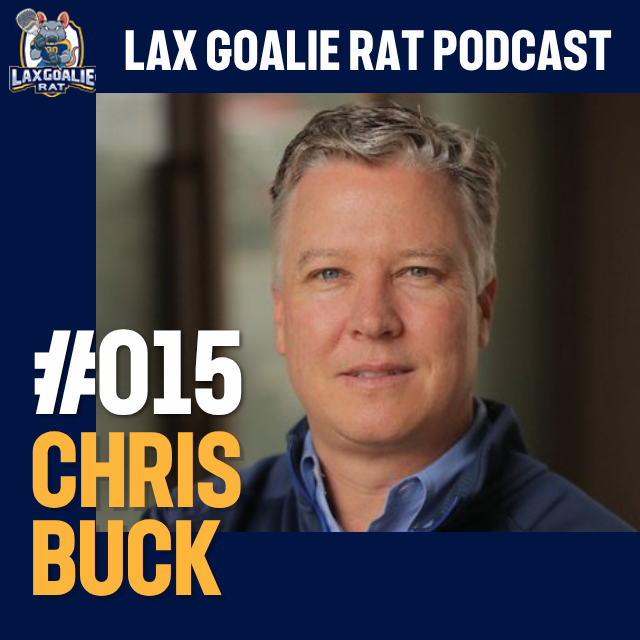
Episode 15: Chris Buck and the Mental Secrets to Becoming a Dominant Lacrosse Goalie
In this episode of the LAX Goalie Rat Podcast, Coach Damon Wilson sits down with Chris Buck, mental conditioning coach, lacrosse goalie coach, and author of Thinking Inside the Crease: The Mental Secrets to Becoming a Dominant Lacrosse Goalie.
Chris shares his journey from being a lacrosse goalie in Connecticut to playing at Ithaca College, taking a break from the sport, and eventually discovering his passion for sports psychology and helping athletes improve their mental game.
The conversation dives deep into the psychological side of goaltending, including confidence, mental toughness, competitive anxiety, fear responses, and developing the mindset needed to perform at a high level.
Chris explains why the mental side of lacrosse goalie play is often overlooked and how goalies can train their mindset the same way they train their technique, footwork, and skills.
In This Episode
Chris explains his lacrosse background, including growing up as a goalie in Connecticut, playing at Ithaca College, and how his own experiences with pressure and performance led him toward sports psychology.
He discusses the importance of developing an unshakable belief and why confidence is something goalies must actively build instead of simply hoping it appears.
Chris explains how goalies can handle bad games, mistakes, and outside criticism by separating a poor performance from their identity as a player.
The conversation explores self-limiting beliefs and how many athletes create mental barriers around what they believe they are capable of achieving.
Chris shares strategies for managing competitive anxiety, explaining why nerves are normal and how elite athletes learn to embrace pressure instead of trying to eliminate it.
He introduces the “Bring It Mindset” and explains how goalies can shift their perspective from fearing shots to attacking them with confidence and aggression.
Chris also discusses how fear responses affect goalie movement, including shrinking in the cage, dropping the hands, and becoming less aggressive.
The episode covers how goalies can train their mental game every day, why mindset work needs repetition, and how preparation creates confidence.
Key Takeaways
Confidence is something you build
Confidence does not appear automatically. Goalies develop confidence through preparation, repetition, visualization, and proving to themselves that they can handle difficult situations.
Mental toughness starts with belief
Elite goalies believe in their ability regardless of mistakes, bad games, or outside opinions. A single performance does not define who they are as a goalie.
Anxiety is part of competing
Feeling nervous before big games is normal. The best athletes do not avoid anxiety—they learn how to use that energy and compete through it.
Do not let fear control your movement
Fear can create physical reactions that prevent goalies from playing aggressively. Developing the right mindset helps goalies attack shots instead of reacting defensively.
Practice your mindset like your skills
Mental training requires repetition. Goalies should practice confidence, focus, and competitiveness every day—not just on game day.
Simplify the position
Great goaltending comes down to three things: having good angles, seeing the ball, and playing with an aggressive mindset.
Topics Covered
Becoming a lacrosse goalie
Chris Buck’s goalie background
Transitioning from player to sports psychology coach
Writing Thinking Inside the Crease
Developing an unshakable belief
Building confidence as a goalie
Mental toughness and resilience
Self-limiting beliefs
Improving self-efficacy
Handling mistakes and bad performances
Competitive anxiety before games
Embracing nerves and pressure
The Bring It Mindset
Fear responses in lacrosse goalies
Why goalies shrink in the cage
Training the mental side of goaltending
Using triggers to build confidence
Visualization and preparation
Creating better habits for performance
The connection between mindset and mechanics
Balancing physical and mental training
The importance of doing your job as a goalie
Memorable Moments
Chris explains how his own experience struggling with pressure during college influenced his decision to study sports psychology and help other goalies overcome the challenges he faced.
He shares the story of helping a goalie redefine their confidence by changing their core belief from comparing themselves to others into trusting their own ability.
Chris discusses the “Bring It Mindset” and how changing a goalie’s perspective from “I hope I play well” to “I am ready for this challenge” can completely change their performance.
One of the biggest lessons from the conversation is that many goalie struggles are not physical problems—they are psychological problems. Instead of only changing mechanics, goalies must also address the mindset behind their actions.
Chris explains why the best goalies focus on the next save instead of worrying about results, recruiting, mistakes, or outside expectations.
Guest
Chris Buck
Mental conditioning coach, lacrosse goalie coach, and author of Thinking Inside the Crease: The Mental Secrets to Becoming a Dominant Lacrosse Goalie.
Resources Mentioned
LAX Goalie Rat Podcast
Thinking Inside the Crease
The Sport of School
Sports psychology and mental conditioning
Visualization exercises
Confidence-building techniques
Goalie mindset training
Mental toughness exercises
Goalie film study
Sponsor
This episode is sponsored by the LAX Goalie Rat Camp.
The online camp includes instructional videos and drills covering goalie technique, footwork, positioning, clearing, and the mental side of goaltending.
Learn more at laxgoalierat.com/goal
Closing
Chris Buck’s message is simple: becoming an elite lacrosse goalie is not just about making saves—it is about developing the mindset that allows you to perform under pressure.
Through confidence, preparation, mental training, and embracing challenges, goalies can improve both on and off the field.
The best goalies do not wait for confidence to appear. They build it every day.