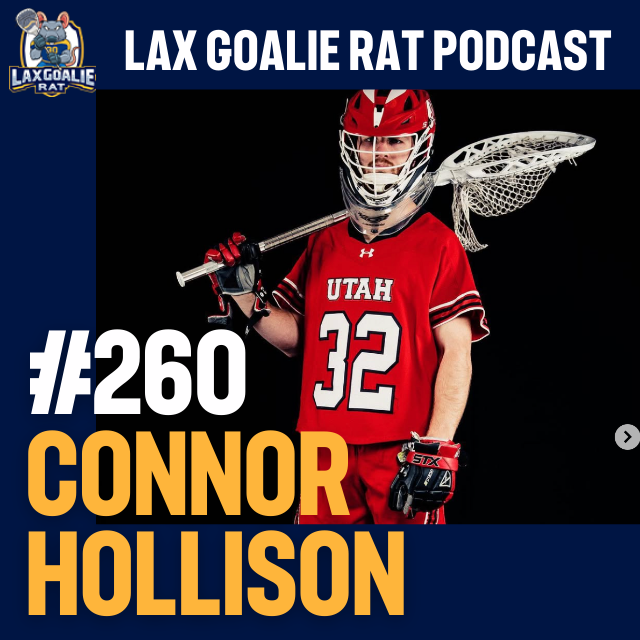
Connor Hollison on Walking On at Utah, Training Smarter, and Adapting Your Goalie Game
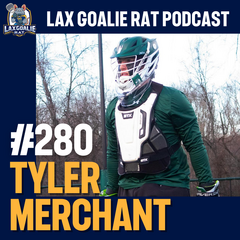
In this episode of the Lax Goalie Rat Podcast, Coach Damon speaks with University of Utah graduate and Adaptive Goaltending founder Connor Hollison about his self-taught goalie journey, the work ethic that helped him reach Division I lacrosse, and the lessons he now shares with developing goalies.
Connor first stepped into the cage in sixth grade after previously playing soccer goalie. Unlike many players who reluctantly become goalies because their team needs one, Connor immediately loved the position. He was drawn to its individuality and the close-knit community surrounding what he describes as a separate sport within lacrosse.
After moving to Park City, Utah, Connor had limited access to formal goalie coaching. He learned primarily through YouTube videos, highlight tapes, and careful observation of elite goalies. He recorded himself training, compared his movements to experienced players, and used the footage to identify technical issues such as dropping his hands or moving inefficiently.
Connor explains that this process was not perfect, but his work ethic helped him progress far enough to walk onto the University of Utah’s Division I lacrosse team. After beginning at the bottom of a six-goalie depth chart, he committed himself to improving his positioning, clearing, movement, and overall understanding of the position.
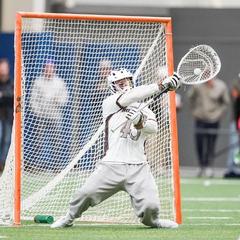
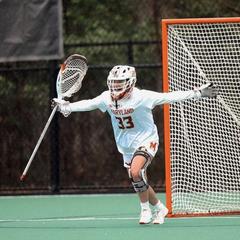
A major focus of the conversation is the importance of adapting goalie technique to the individual athlete. Connor discusses why there is no single correct stance, arc, or stepping pattern for every goalie. Height, athleticism, playing style, and personal comfort all influence which techniques will be most effective.
Instead of automatically stepping laterally or at a forty-five-degree angle, Connor teaches goalies to take the path that gets their body behind the ball. He also explains how small steps and hip pivots can help a goalie remain square to a dodging shooter without getting caught moving when the shot is released.
Connor and Coach Damon also discuss positioning, including when a goalie may benefit from playing a shallow arc and stepping out to challenge a shooter. Connor believes these advanced techniques should be introduced after a goalie has developed a reliable stance, arc, and movement foundation.
Clearing was another major challenge during Connor’s development. When he arrived at Utah, he struggled to throw accurately over longer distances and did not always understand the decision-making process after making a save. Through repeated passing drills and a clearer progression of reads, he became more confident starting the transition game.
The episode also explores goalie-specific physical training. Connor recommends using resistance bands, reaction balls, wrist weights, ankle weights, plyometrics, and explosive strength exercises. Rather than lifting only to become stronger, goalies should train movements that resemble the controlled and explosive actions required in the cage.
Connor also emphasizes basic habits that athletes often overlook, including sleeping enough, eating well, staying hydrated, and taking care of their overall health. These habits directly affect physical performance, concentration, emotional control, and recovery.
On the mental side, Connor shares techniques he learned while working with a sports psychologist at Utah. He explains how verbal or physical reset cues can bring a goalie back to the present moment after allowing a goal. He also introduces the “four Fs” reset process: express the frustration, identify the fix, forget the play, and focus on the present.
Today, Connor uses his experiences through Adaptive Goaltending to help younger players access the instruction he wished he had while learning the position. His coaching includes in-person lessons, small-group clinics, film review, practice plans, highlight videos, online training content, and mental-performance support.