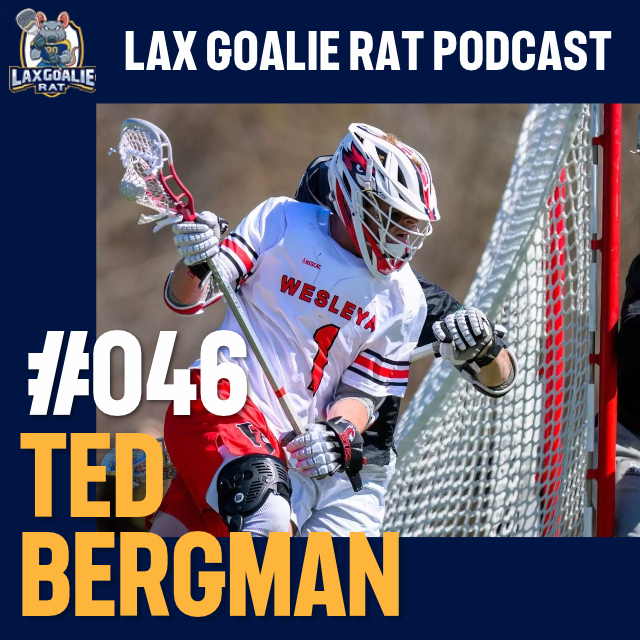
Ted Bergman on Mental Toughness and the Bottom-Hand Approach to Goaltending
Episode Overview
In Episode 46 of the Lax Goalie Rat Podcast, Coach Damon Wilson sits down with Ted Bergman, assistant coach at Cleveland State University and a former standout goalie at Wesleyan University, to discuss the mental, physical, and technical aspects of becoming a better lacrosse goalie.
Ted shares the lessons he learned throughout his playing career and explains the philosophies he now teaches his goalies. From developing laser-like focus and building mental toughness to improving hip mobility and rethinking traditional save techniques, this episode is packed with practical advice goalies can apply to their training.
One of the biggest takeaways is Ted's emphasis on the bottom-hand approach to making saves, which focuses on driving the bottom hand towards the ball, keeping the body behind the stick, and finishing with a horizontal stick. He also explains how simple routines, such as controlling your breathing after conceding a goal, can help goalies reset mentally and prepare for the next shot.
Whether you're a youth goalie, a high school player, or an experienced goaltender looking to refine your game, this conversation offers valuable insights into becoming a more focused, efficient, and confident player.
What You'll Learn in This Episode
-
How to train your focus: Learn Ted's numbered-ball exercise to improve concentration and train your eyes to focus on the smallest details of a lacrosse ball.
-
How to reset after conceding a goal: Discover Ted's post-goal routine using controlled breathing, touch, and a simple thank-you to the referee to regain composure.
-
How to get back into a game after a difficult stretch: Understand how making an athletic play, such as picking up a ground ball or making a good outlet pass, can help you reconnect with the game.
-
Why hip strength and mobility matter: Learn why explosive hip movement is essential for making saves and how hip exercises and resistance bands can support your development.
-
Why yoga can improve your goalie game: Explore how flexibility, breathing, and mindfulness can help you manage distractions and remain present.
-
How to approach communication: Understand Ted's philosophy on keeping your focus on the ball while allowing defenders to communicate with one another.
-
How breathing can improve your saves: Learn when to inhale as a shooter prepares and when to exhale as you explode towards the ball.
-
What the bottom-hand approach is: Discover Ted's alternative to the traditional top-hand-driven save technique and why he believes it helps goalies move more efficiently.
-
Why a horizontal stick position matters: Learn how finishing with a horizontal stick can maximise the stick head's coverage and help limit rebounds.
-
How to develop a more efficient stance: Understand why Ted teaches a relaxed stance instead of an overly tense, aggressive position.
-
Why goalies should question traditional techniques: Learn to ask why a technique works instead of following conventional coaching advice without understanding its purpose.
-
Why passion matters: Hear Ted's advice to young goalies to embrace their love of lacrosse rather than worrying about whether caring about the sport is considered cool.
Key Takeaways for Lacrosse Goalies
1. Train Your Mind, Not Just Your Body
Ted believes the mental side of goaltending is often overlooked. Goalies face pressure, distractions, and constant attention, making the ability to focus on the ball essential. His numbered-ball exercise helps train the mind to concentrate on specific details rather than getting distracted by everything happening around the crease.
2. Develop a Consistent Post-Goal Routine
After conceding a goal, Ted teaches his goalies to reach into the net, inhale, hold their breath until they have the ball, feel the ball with their fingers, and exhale. They then calmly hand the ball to the referee and say, "Thank you."
The routine encourages goalies to reset, control their emotions, and approach the next shot with a clear mind.
3. Build Explosive Hips
Hip strength, flexibility, and mobility are essential for making saves. Ted recommends incorporating hip stretches, mobility exercises, and resistance-band work into goalie warm-ups. He also shares a single-leg squat jump exercise to develop hip strength, balance, and control.
4. Use Breathing to Stay Present
Ted teaches goalies to inhale through the nose as a shooter winds up and exhale as they explode towards the ball. Combined with yoga and mindfulness, this approach can help goalies manage distractions, stay calm, and react more efficiently.
5. Rethink Your Save Technique
The bottom-hand approach challenges the traditional emphasis on driving the top hand towards the ball. Ted teaches goalies to push the bottom hand out and down, move their feet, keep their bodies behind the stick head, and finish with a horizontal stick. His goal is to make saves more efficient while maintaining proper body positioning.
6. Keep Your Stance Relaxed
Rather than holding a deep, tense stance, Ted encourages goalies to keep their hands comfortably in front of them and their bodies relaxed. His reasoning is that relaxed muscles can engage more quickly when it's time to make a save.
7. Don't Be Afraid to Love Lacrosse
Ted's final advice is simple: embrace your passion for the game. Keep learning, practise consistently, and don't let the pressure to appear indifferent stop you from caring about something you love.
About Ted Bergman
Ted Bergman is an assistant coach at Cleveland State University, where he works with the program's goalies. He played collegiate lacrosse at Wesleyan University, where he developed his approach to goaltending under the guidance of goalie coach Charlie Congleton.
Ted focuses on the mental, physical, and technical aspects of the position, including concentration, breathing, hip development, and the bottom-hand approach to making saves. Outside of goaltending, he is passionate about international lacrosse development and has worked to grow the sport at the grassroots level in Israel, Africa, and Europe.
Resources Mentioned in This Episode
-
Cleveland State University Lacrosse: Find Ted Bergman's coaching bio on the university's lacrosse website.
-
Lax Goalie Rat Camp: Explore Coach Damon's online goalie training programme at laxgoalierat.com/goal.
-
Lacrosse Virtual Summit: The event where Damon first encountered Ted's presentation on goaltending.
Final Thoughts
Ted Bergman's approach is a reminder that improving as a lacrosse goalie isn't just about making more saves in practice. It's about training your focus, managing your emotions, developing your body, and understanding why your techniques work.
Start with the fundamentals. Practise your breathing, work on your hip mobility, develop a consistent routine after conceding a goal, and stay curious about your technique. Small improvements in these areas can make a meaningful difference in your performance.
Most importantly, as Ted says, don't be afraid to love lacrosse. Keep learning, keep practising, and bring that passion with you every time you step into the crease.