Rodney "Roddy" Rullman on Goalie Fundamentals, Coaching, and Defensive Leadership
Episode Overview
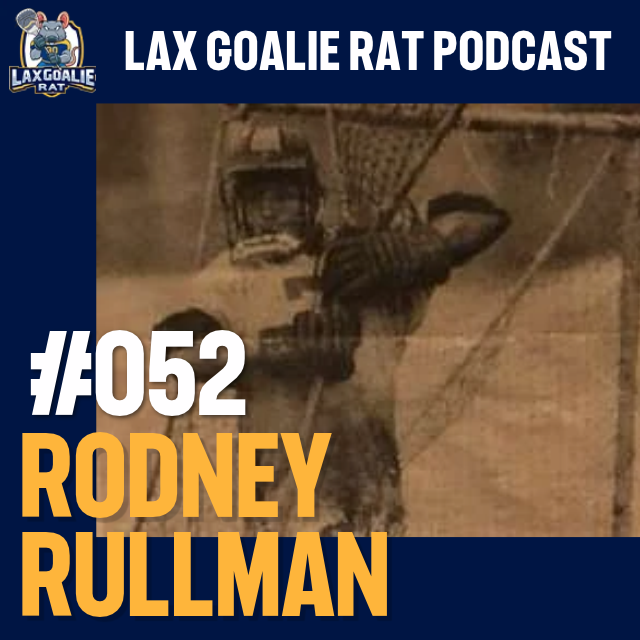
In Episode 52 of the Lax Goalie Rat Podcast, Coach Damon Wilson welcomes Rodney "Roddy" Rullman, a three-time All-American goalie, Kelly Award winner, and longtime lacrosse goalie coach. Having played at the University of Virginia and competed for decades, Rodney "Roddy" Rullman shares his unique perspective on how the goalie position has evolved and what it takes to develop confident, fundamentally sound goalies.
Rodney "Roddy" Rullman reflects on his journey from starting in goal in seventh grade to winning a national championship with Virginia in 1972. He discusses how goalie training has changed since the 1970s, explains his coaching philosophy, and shares the fundamentals he believes every goalie should master.
The conversation covers stance, stick positioning, movement in the crease, visual focus, clearing, and defensive communication. Rodney "Roddy" Rullman also explains why goalies must learn to coach themselves during games, take responsibility for their performance, and understand how their decisions affect the entire defense.
Whether you're a young goalie learning the basics, a coach developing players, or an experienced competitor looking to refine your approach, this episode offers decades of practical knowledge about the position.
What You'll Learn in This Episode
-
Rodney "Roddy" Rullman's journey into goal: How he started playing goalie in seventh grade, developed at the University of Virginia, and helped his team win the 1972 national championship.
-
How goalie training has evolved: The differences between the techniques taught in the 1970s and modern approaches to stance, movement, and positioning.
-
Developing a comfortable stance: Why goalies should find a stance that suits their body and athletic ability rather than copying a style that does not work for them.
-
Mastering the fundamentals: Rodney "Roddy" Rullman's approach to teaching simple movements through consistent repetition and focused practice.
-
Building efficient save mechanics: How to use proper positioning, stick placement, and movement to improve your chances of stopping shots.
-
Improving visual focus: Why seeing the ball released from the shooter's stick is essential to making a save.
-
Training through repetition: How repeating reasonable, savable shots helps goalies understand and refine their movements.
-
Learning from failure: Why missed saves provide opportunities to identify mistakes, revisit fundamentals, and improve.
-
Developing better clearing skills: How goalies can improve passing accuracy and become more effective at starting transition.
-
Leading the defense: Why goalies should communicate consistently, direct defenders, and help the team manage opposing attacks.
-
Building confidence without becoming cocky: How accountability, preparation, and a willingness to learn help goalies develop a healthy competitive mindset.
-
Recovering from a bad stretch: Why goalies should evaluate what went wrong, make adjustments, and prepare for the next shot rather than dwelling on mistakes.
-
Understanding team defense: How pressure on shooters, proper defensive positioning, and communication can make saves more manageable.
-
Teaching goalies to coach themselves: Why players need to make quick decisions and adjustments without relying entirely on instructions from the sideline.
Key Takeaways
1. Keep goalie training simple and consistent
Rodney "Roddy" Rullman's coaching philosophy centers on teaching a small number of fundamental skills and drilling them repeatedly. Rather than overwhelming players with complicated techniques, he focuses on the movements that help them make saves.
When a goalie struggles with a particular shot, such as stick-side low or a bounce shot, Rodney "Roddy" Rullman returns to the basics. He demonstrates the movement, explains what needs to happen, and repeats the drill with reasonable shots until the goalie becomes more comfortable.
The lesson is straightforward: understand the movement, practice it consistently, and give yourself time to improve.
2. Find a stance that works for you
Rodney "Roddy" Rullman believes there is no single stance that works for every goalie. Players should find a comfortable, athletic position that allows them to react effectively to different shots.
He favors a stance with some knee flex, an upright upper body, and the ability to move aggressively towards the ball. He also cautions against sitting too low if doing so makes high shots difficult to reach.
The key is to evaluate your results rather than follow trends blindly. If your current stance consistently leaves you vulnerable in certain areas, be willing to make adjustments.
3. See the release and go get the ball
One of Rodney "Roddy" Rullman's most important coaching principles is the need to see the ball leave the shooter's stick. Goalies may look towards the shooter without actually maintaining the visual focus needed to read the release.
When a goalie misses a shot, Rodney "Roddy" Rullman encourages them to ask a simple question: Did I actually see the ball?
If the goalie saw the release and used the correct fundamentals, the next step may simply be more repetition. If they did not see it clearly, improving focus should become a priority.
4. Treat failure as part of development
Goalies will allow goals, make mistakes, and experience difficult games. Rodney "Roddy" Rullman believes these moments are valuable when players use them to understand what went wrong.
Instead of treating failure as unacceptable, goalies should identify the mistake, work with a coach when necessary, and focus on correcting it. Repeated practice helps turn those lessons into better habits.
The goal is not to avoid every mistake. It is to learn from mistakes and reduce the likelihood of repeating them.
5. Develop your passing as well as your shot-stopping
Making a save is only part of a goalie's responsibility. Rodney "Roddy" Rullman stresses the importance of accurate passing and effective clearing, pointing out that a save can quickly become a lost opportunity if the goalie gives possession straight back to the opposing team.
He recommends building passing skills progressively:
-
Start by throwing towards the goal from a distance, even if the pass bounces.
-
Work towards hitting the goal consistently without a bounce.
-
Practice placing the pass near the top of the goal, where a teammate's stick would typically be positioned.
Developing these skills helps goalies contribute to transition and gives their team more opportunities to attack.
6. Take responsibility for your defence
Rodney "Roddy" Rullman believes goalies should be active leaders who communicate with defenders and help organize the team's defensive structure.
Because goalies can see the entire field in front of them, they are well positioned to recognize threats, direct defenders towards shooters, and identify developing plays. This is particularly important when opposing attackers have enough time and space to release powerful shots.
A goalie should not blame the defense automatically after conceding a goal. They should also consider whether better communication, positioning, or leadership could have helped prevent the opportunity.
7. Build confidence through preparation and accountability
Rodney "Roddy" Rullman makes an important distinction between confidence and cockiness. Confidence comes from hard work, preparation, and understanding your responsibilities. Cockiness often involves refusing to accept responsibility when things go wrong.
Confident goalies recognize that they will concede goals, evaluate their own performance honestly, and move forward. They also understand their role in supporting their defenders.
By taking responsibility and preparing consistently, goalies can develop the confidence needed to lead their teams.
8. Learn to coach yourself during games
During a game, coaches cannot always intervene when a goalie makes a mistake. Rodney "Roddy" Rullman encourages players to develop the ability to evaluate situations and make adjustments independently.
After a goal, quickly consider what happened. Did you see the release? Was your stick in the right position? Was your stance effective? Did the defense apply enough pressure to the shooter?
Then move on and prepare for the next play. Goalies must learn to review mistakes without allowing frustration to affect their next decision.
9. Play to your athletic strengths
Rodney "Roddy" Rullman questions the idea that every goalie should use the same stance or movement pattern. He believes coaches should help players develop techniques that complement their individual athletic abilities.
A stance that works for a tall goalie may leave a shorter goalie vulnerable to high shots. Likewise, a technique that feels natural to one player may restrict another player's movement.
The best approach is to teach sound fundamentals, evaluate what works, and allow players to make adjustments that improve their performance.
Rodney "Roddy" Rullman's Five Core Goalie Fundamentals
During the conversation, Rodney "Roddy" Rullman outlines five key areas he teaches goalies:
-
Body stance: Find a comfortable, athletic position that supports effective movement.
-
Stick position: Hold and position the stick comfortably so it is ready to react to the shot.
-
Positioning in the goal: Understand where you are in the crease as the ball moves around the field.
-
Communication: Talk consistently and help organize the defense.
-
Focus: Track the ball, recognize the release, read the shot, and react decisively.
Rodney "Roddy" Rullman also places significant emphasis on clearing fundamentals, particularly accurate passing. Although clearing sits outside his five core areas, he considers it an essential part of a goalie's overall development.
About Rodney "Roddy" Rullman
Rodney "Roddy" Rullman is a former University of Virginia lacrosse goalie, three-time All-American, and recipient of the Kelly Award, which recognizes the top collegiate goalie. He was part of Virginia's 1972 national championship team and competed at a high level for decades.
After his playing career, Rodney "Roddy" Rullman dedicated much of his time to coaching and training goalies in the Charlottesville area and beyond. His approach focuses on simple fundamentals, repeated practice, individual comfort, strong visual focus, and effective defensive communication.
Known for his vocal leadership and passion for goalie development, Rodney "Roddy" Rullman believes the position teaches valuable life lessons about accountability, perseverance, and learning from failure.
Listen and Learn
This episode offers a detailed look at the fundamentals that have shaped Rodney "Roddy" Rullman's approach to lacrosse goaltending over decades of playing and coaching.
Listen to Coach Damon Wilson's conversation with Rodney "Roddy" Rullman to learn how to improve your stance, sharpen your focus, develop your clearing skills, and become a more confident leader in the crease.
Remember: keep your training simple, repeat the fundamentals, learn from every mistake, and prepare yourself to make the next save.