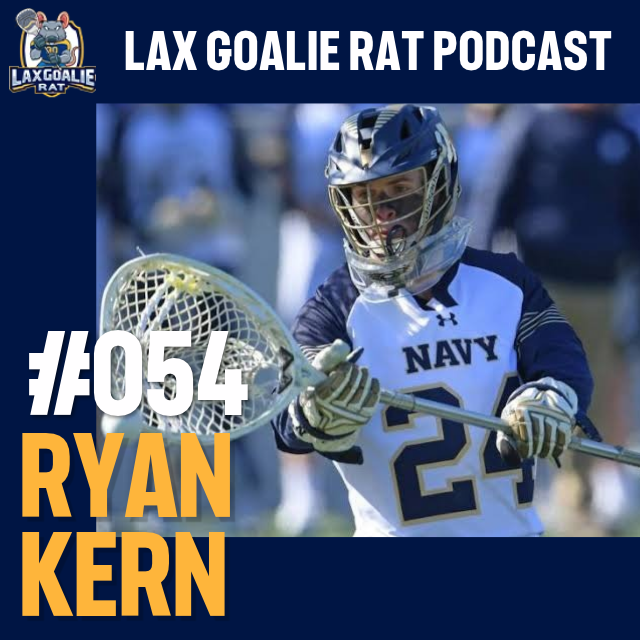
Ryan Kern on Goalie Fundamentals, Mental Toughness, and Leadership at Navy
Episode Overview
In Episode 54 of the Lax Goalie Rat Podcast, Coach Damon Wilson sits down with Ryan Kern, the starting goalie for the Navy Midshipmen, to discuss his journey as a lacrosse goalie, his experience at the U.S. Naval Academy, and the techniques and mindsets that have helped him develop as a player.
Ryan shares how he became a goalie after spending his early years playing different positions, why he believes young players need better access to goalie-specific coaching, and how he adapts his stance and arc to different shooting situations. He also explains his favourite goalie drills, including walking the line, resistance band training, and exercises designed to improve hand speed and footwork.
Beyond technique, Ryan discusses the mental side of playing goalie, including how to recover from a slump, reset after allowing goals, and maintain confidence under pressure. He also shares lessons about leadership, accountability, time management, and enjoying every moment of the game.
Whether you're a young goalie, an experienced player, or a coach looking for practical training ideas, this episode offers useful insights into developing your skills and becoming a stronger presence in the crease.
What You'll Learn in This Episode
-
How Ryan Kern decided to become a lacrosse goalie
-
Why goalie-specific coaching and fundamentals matter for young players
-
How to adapt your stance and arc based on the shooter's position
-
Why an aggressive step towards the ball can be effective
-
How to improve hand speed, footwork, and explosiveness
-
Goalie-specific drills you can practise with limited equipment or on your own
-
How to work through a slump by returning to the fundamentals
-
Why goalies should celebrate big saves and use positive energy to motivate their teammates
-
Ryan's “Fix It, Forget It” approach to responding after a goal
-
How prayer, teammates, and mental resets can help goalies stay composed
-
What physical training can teach you about mental toughness
-
How goalies can lead through communication, example, and accountability
-
How to balance Division I lacrosse with academic responsibilities
-
Why confidence, gratitude, and enjoying the game are essential to long-term development
Key Takeaways
1. Build Your Game on Strong Fundamentals
Ryan explains that one of the challenges he faced growing up was not having access to a dedicated goalie coach or goalie camps. He believes young goalies need more instruction in the fundamentals and disciplines required to play the position well.
When something isn't working, returning to the basics can make a real difference. Ryan describes how he worked with his coach, reviewed film, and focused on his movements and steps towards the ball to get through a difficult stretch during his freshman season.
2. Adapt Your Stance and Arc
Ryan describes his playing style as aggressive, with a stance and arc that can change depending on the shooter's location and how the game is unfolding. He often uses a 45-degree step towards the ball, particularly on bounce shots.
He also discusses the importance of finding the right balance in your stance. A deeper squat may help you explode towards the ball, but goalies must still stay loose and avoid giving shooters too much of the cage.
3. Train Your Hands and Feet with Purpose
Ryan shares several drills that help him develop quick reactions and efficient movements:
-
Walking the line: Practise moving your hands and feet together while visualising shots and focusing on clean, controlled saves.
-
Resistance band drills: Use bands to work on stepping towards the ball and improving movement.
-
Weighted shaft training: Practise with a heavier shaft before returning to your regular stick to notice the difference in weight and speed.
-
Resistance band and tennis ball drills: Work on foot speed and reactions while wearing a resistance band and using a shorter stick.
-
Solo ball-drop drill: Drop a ball beside you, let it bounce, and react quickly to retrieve it.
Ryan emphasises that drills should have a clear purpose. Rather than walking the line for a long distance without focus, goalies should take their time, reset between repetitions, and concentrate on making each movement correctly.
4. Develop Explosiveness and Hand Speed
Ryan incorporates strength training, Olympic lifts, and resistance band work into his training. He also discusses shadowboxing and weighted hand movements as ways to work on speed and conditioning.
His main point is to focus on technique and explosiveness rather than simply completing a high number of repetitions.
5. Reset After Giving Up a Goal
Ryan shares a simple two-step approach he uses after a goal: Fix It, Forget It.
First, talk with your defence and work out what needs to change. Take responsibility where appropriate and make sure everyone understands how to improve on the next play. Then, once you've addressed the situation, let it go and refocus on making the next save.
Ryan also encourages goalies to stay relaxed and confident during difficult stretches. A quick prayer, a moment to centre yourself, or encouragement from teammates can help you reset mentally.
6. Use Positive Energy to Fuel Your Game
Ryan believes goalies should allow themselves to enjoy the excitement of making a big save. Celebrating a save can help build momentum, energise teammates, and remind you why you love playing.
He explains that this energy is not about drawing attention to yourself. It comes from enjoying the game and sharing that excitement with your team.
His advice is to ride the highs without allowing the lows to take over.
7. Build Mental Toughness Through Challenges
Ryan credits the demanding and structured environment of the Naval Academy with helping him develop mental toughness. He explains that pushing yourself physically can also challenge your mental limits and help you discover that you are capable of more than you initially believed.
He encourages goalies to enter games believing they can stop any shot, while continuing to work hard to develop the skills needed to support that confidence.
8. Lead Through Communication and Accountability
As the goalie, you can see much of what is happening on the field, making communication an essential part of your role. Ryan believes goalies should help organise the defence, encourage teammates to communicate, and hold players accountable when necessary.
He recommends approaching teammates with a clear explanation of what you've noticed and asking for their perspective. When a previously agreed game plan isn't being followed, a firmer conversation may be needed.
The goal is to help the team improve, not simply to criticise a teammate.
9. Balance Lacrosse with Academics and Daily Responsibilities
Ryan shares how writing down his daily schedule helps him manage the demands of Division I lacrosse and life at the Naval Academy. He includes study time and breaks in his schedule, stays organised, and seeks help from classmates, professors, or tutors when needed.
His experience highlights how planning and asking for support can help student-athletes manage demanding schedules.
10. Enjoy the Moment and Keep Improving
Ryan's advice to younger goalies is to stop feeling as though the entire game rests on their shoulders. He encourages players to trust their ability, enjoy the experience, and take things one day at a time.
He also recommends playing different positions when possible because the knowledge gained across the field can translate into better goalie play.
Ultimately, the game is about more than individual recognition. It's about teamwork, personal growth, and making memories with the people you play alongside.
About Ryan Kern
Ryan Kern is a lacrosse goalie who played for the U.S. Naval Academy's Navy Midshipmen. As a redshirt freshman, he started all 14 contests and recorded 125 saves, the most by a Navy freshman goalkeeper since Mickey Jarbo. In the season discussed in the episode, Ryan also earned All-Patriot League recognition and ranked among the national leaders in goals-against average.
In the conversation, Ryan discusses his development as a goalie, his experience at Navy, his training methods, and the leadership and mental skills that help him compete at the collegiate level.
Resources Mentioned
-
Lax Goalie Rat Online Camp: https://laxgoalierat.com/goal
-
Navy Men's Lacrosse Roster: https://navysports.com/
-
Book: Extreme Ownership by Jocko Willink
-
Video: Jocko Willink's “Good” video on YouTube
-
Goalie inspiration discussed: RJ Wickham, Mickey Jarbo, John Connors, and John Galloway
Listen to the Episode
Tune in to Episode 54 of the Lax Goalie Rat Podcast to hear Ryan Kern's advice on goalie fundamentals, purposeful training, mental resilience, and leadership.
If you're ready to improve your game, start by choosing one skill to work on, practising it with intention, and trusting the fundamentals when the pressure rises.
For more goalie training tips and resources, visit Lax Goalie Rat.