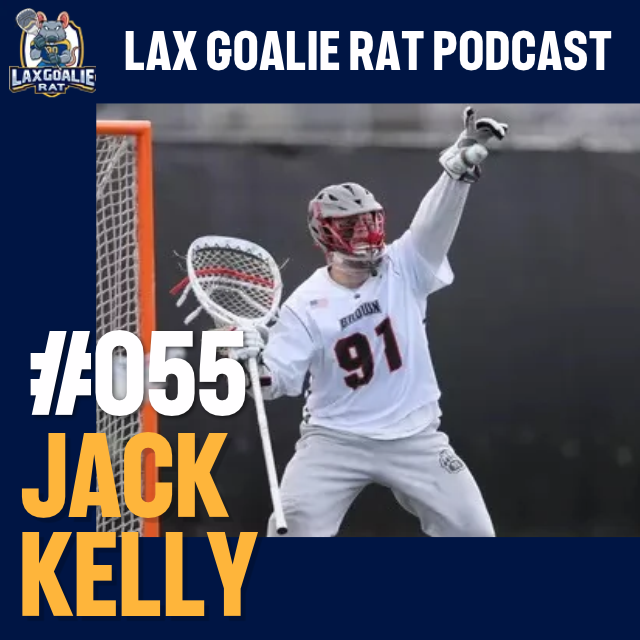
Jack Kelly on Mental Toughness, Goalie Fundamentals, and Leadership
Episode Overview
In Episode 55 of the Lax Goalie Rat Podcast, Coach Damon Wilson sits down with Jack Kelly, one of lacrosse's most decorated goalies, to discuss the techniques, habits, and mindsets that have helped him succeed at the highest levels of the sport.
Jack shares his journey from discovering the goalie position as a young player to earning recognition at Brown University, winning a gold medal with Team USA in 2018, and competing professionally with the Denver Outlaws and the PLL's Redwoods. He discusses his unconventional playing style, the importance of finding a stance that feels natural, and why playing different positions and sports can help young goalies develop a stronger lacrosse IQ.
The conversation also explores the mental side of the position, including how to handle pressure, stay focused on each shot, develop mental toughness, and respond constructively after conceding a goal. Jack explains how preparation, communication, positive energy, and being a good listener can make a goalie a stronger leader and teammate.
Whether you're a youth goalie, a high school player, a college athlete, or a coach, this episode offers valuable lessons on developing your skills, building confidence, and becoming a more complete player.
What You'll Learn in This Episode
-
How Jack Kelly discovered his passion for playing goalie
-
Why early goalie-specific coaching can help players develop
-
How playing other positions and sports improves lacrosse IQ and athleticism
-
Why stick skills and clearing ability are essential for goalies
-
How to find a comfortable stance and playing style
-
Why preparation and familiarity help goalies manage pressure
-
How to structure goalie training around hand-eye coordination, footwork, and full saves
-
How to keep improving when you're the backup goalie
-
Why listening is one of the most important qualities of a leader
-
How energy and attitude affect the entire defense
-
How to focus on one shot and one defensive possession at a time
-
Why mental toughness develops through practice and experience
-
How to create a useful pregame and post-goal routine
-
How to respond to goals without losing focus or team cohesion
-
Why young goalies should learn to become comfortable with uncomfortable situations
Key Takeaways
1. Play Different Positions and Sports
Jack started playing lacrosse in elementary school and spent time at midfield, attack, and other positions before becoming a dedicated goalie. He credits that experience with helping him develop his lacrosse IQ.
Playing different positions helps goalies understand how the game works beyond the crease. It can improve their awareness of defensive positioning, passing angles, and the situations that lead to shots. Playing other sports can also help young athletes develop their overall athleticism.
Jack believes specialization has its place, but young players benefit from learning the game broadly before narrowing their focus too early.
2. Develop Strong Stick Skills
Jack explains that handling a goalie stick comfortably can take time because of its weight and the different mechanics involved in throwing. He encourages goalies to practice throwing from different angles and hand positions, both while stationary and on the move.
Being able to throw left-handed and right-handed, throw on the run, and pass while moving or backpedaling can make a goalie more confident and effective in transition.
3. Find a Playing Style That Works for You
Jack describes his style as unconventional. He uses a medium arc, often plays in a deep squat, and sometimes drops to his knee or takes large steps to make saves.
Rather than insisting that every goalie use exactly the same stance or movement pattern, Jack believes players should find what works best for their bodies and abilities. A goalie needs to feel comfortable enough to react naturally instead of thinking about every movement.
Coaches should teach sound fundamentals while allowing players to adapt those fundamentals to their own strengths.
4. Prepare to Handle Pressure
Jack enjoys the pressure that comes with being a goalie because of how much the position can influence a game. He explains that preparation is one of the best ways to manage that pressure.
His preparation includes watching film, practicing against shooters similar to those he will face, and developing confidence through repetition. When game day arrives, the goal is to relax, avoid overthinking, and trust the work already completed.
5. Build Training from the Fundamentals Up
Jack structures goalie training by isolating individual skills before combining them into full saves. His approach typically includes:
-
Warming up the hands and feet
-
Practicing hand-eye coordination and ball-toss drills
-
Working on footwork and stepping towards shots, sometimes without a stick
-
Combining hand and foot movements
-
Progressing to regular shots and game-like saves
He emphasizes that fundamentals matter, but goalies also need repetitions that resemble what they will actually do during a game.
6. Keep Improving Even When You're the Backup
Jack spent time as a backup goalie in high school and at Brown University. During those periods, he focused on performing well in practice and making the most of opportunities to demonstrate his ability.
He also invested effort in summer lacrosse and trusted his coaches to communicate his progress. His experience shows that development doesn't stop when you're not starting. Consistency, preparation, and making the most of available opportunities can help you continue progressing.
7. Lead by Listening
Jack believes strong leaders listen carefully to their teammates and try to understand what others need. A goalie may see much of the field, but that doesn't mean they automatically understand everything that happened during a defensive possession.
After a goal, talking with defenders and listening to their perspectives can help the team identify what went wrong and how to improve. Jack encourages goalies to focus on problem-solving rather than immediately blaming the defense.
8. Bring Positive Energy to the Field
Jack's energy comes from his passion for lacrosse and his teammates. He explains that a positive attitude can be contagious, helping the defense stay engaged and communicate more effectively.
The opposite can also happen. If a goalie regularly displays negative body language or becomes difficult to approach after goals, teammates may stop communicating openly.
Goalies can strengthen their leadership by staying vocal, encouraging teammates, and creating an environment where the defense can work through problems together.
9. Focus on the Next Shot
Jack explains that focus means eliminating distractions and concentrating on the current shot or defensive possession. Once a goal is scored, it cannot be changed. The important question is what the goalie and defense can do better next time.
He credits coach Chris Buck and the book Mental Secrets of Being a Lacrosse Goalie: Thinking Inside the Crease with helping him understand this approach more clearly.
Jack also challenges the idea that a goalie must make the first save or establish a rhythm to have a successful game. A difficult start doesn't determine how the rest of the game will unfold.
10. Develop Mental Toughness Over Time
For Jack, mental toughness means staying calm, composed, and focused even when something goes wrong. It develops through experience, preparation, and practicing how to respond to challenging situations.
Whether a goalie allows several goals, faces distractions from the crowd, or encounters adversity on the field, the goal is to remain focused on the task at hand.
Jack also questions the need for superstitions that make players feel they must complete a specific action to perform well. Having a routine can be helpful, but confidence should come from preparation and the ability to respond to whatever happens.
11. Create a Purposeful Post-Goal Routine
After conceding a goal, Jack prioritizes communication with his defense. He discusses what happened, listens to the players involved, and works with them to identify what needs to change.
He doesn't automatically turn around to retrieve the ball from the net because he wants to keep his attention on the defensive unit and the next possession.
Once the discussion is complete, he takes a sip of water, refocuses on the ball, and prepares for the next face-off. His approach reinforces an important lesson: acknowledge what happened, learn from it, and move forward.
12. Learn to Be Comfortable with the Uncomfortable
Jack's advice to young goalies is to prepare for a variety of situations. Goalie play involves different shots, angles, movements, clearing responsibilities, and leadership challenges.
The more situations players experience during training, the less likely they are to become distracted by unfamiliar circumstances during games.
He encourages young athletes to keep developing their overall athleticism, learn the game from different positions, and build confidence through preparation.
About Jack Kelly
Jack Kelly is a highly decorated lacrosse goalie who played collegiately at Brown University and professionally with the Denver Outlaws before joining the PLL's Redwoods. His accomplishments include winning a gold medal with Team USA in 2018, earning the nation's most outstanding goalie honor in 2016, receiving two USILA All-American selections, and setting Brown's career record with 673 saves.
He was also named MLL Goaltender of the Year in 2017 and Rookie of the Year in 2016. Beyond his achievements on the field, Jack is recognized in this conversation for his leadership, passion for the game, and commitment to supporting his teammates.
Resources Mentioned
-
Lax Goalie Rat Online Camp: https://laxgoalierat.com/goal
-
Book: Mental Secrets of Being a Lacrosse Goalie: Thinking Inside the Crease by Chris Buck
-
Brown University goalie coach: Kip Turner
-
Goalies Jack looked up to: Sal Ocasio and Kilman Johnson
-
Professional team: PLL's Redwoods
Listen to the Episode
Listen to Episode 55 of the Lax Goalie Rat Podcast to hear Jack Kelly's full conversation with Coach Damon Wilson about goalie development, leadership, preparation, and the mental side of the game.
Take one lesson from this episode and put it into practice at your next training session. Work on your fundamentals, trust your preparation, communicate with your defense, and focus on the next shot.
For more goalie training resources, visit Lax Goalie Rat.