Coach Rob Muniz on Strength Training, Mobility, and Injury Recovery for Lacrosse Goalies
Episode Overview
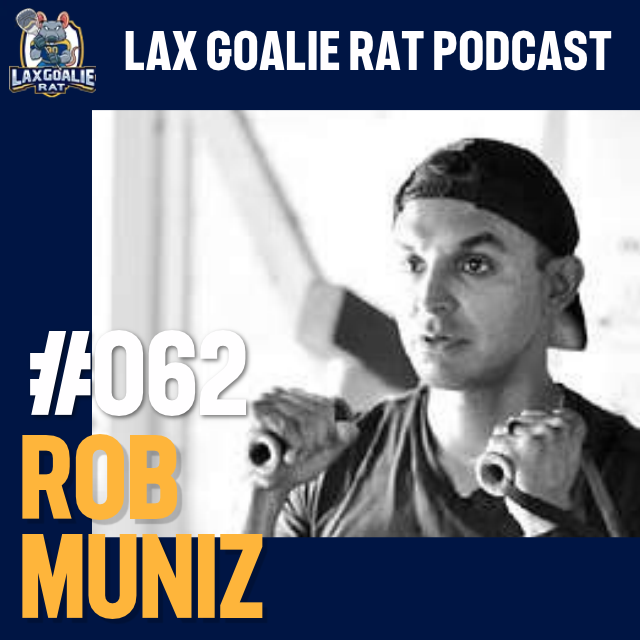
In Episode 62 of the Lax Goalie Rat Podcast, Coach Damon Wilson welcomes Coach Rob Muniz, a personal trainer from Santa Rosa, California, and the founder behind Happy Sweaty Life, to discuss how physical training can help lacrosse goalies improve their performance and stay healthy.
Rob shares his background in athletics, bodybuilding, and physical training, along with his approach to building a strong foundation through basic movements, bodyweight exercises, and sport-specific conditioning. He explains why hip mobility, core strength, foam rolling, and recovery matter for athletes, and how goalies can develop the explosiveness and coordination needed to make saves.
The conversation also explores training young athletes, the benefits of playing multiple sports, recovering from injuries, and building mental toughness through challenging workouts. Whether you're a youth goalie, a competitive player, a coach, or a parent, this episode offers practical ideas for developing athletic ability while creating a sustainable approach to training.
What You'll Learn in This Episode
-
How Coach Rob Muniz developed his passion for fitness and understanding the human body.
-
Why young athletes should focus on fundamental movements before complicated workouts.
-
How bodyweight exercises, crawling, squats, lunges, and resistance bands can support athletic development.
-
Why children should have opportunities to try different sports instead of specializing too early.
-
How skills from baseball and other sports can transfer to lacrosse goalie performance.
-
Why hip strength, flexibility, and mobility are important for explosive movement.
-
How a basic squat can help identify potential movement limitations.
-
How foam rolling and professional massage fit into Rob's approach to recovery.
-
Why mindset and support from others matter during injury rehabilitation.
-
How to approach training safely and avoid choosing workouts that are too advanced.
-
Why long-distance running may not fully prepare goalies for the explosive demands of their position.
-
How challenging practices can help develop mental toughness.
-
Why jump rope is useful for coordination, quick feet, and ankle conditioning.
Key Takeaways
1. Build a Strong Foundation Before Adding Complexity
Rob recommends starting young athletes with basic movements such as running, jumping, crawling, squatting, and other bodyweight exercises.
Before designing a program, he considers the athlete's everyday activities, environment, current activity level, and individual capabilities. This helps establish an appropriate starting point.
Rather than immediately introducing complicated workouts or heavy weights, the goal is to develop body awareness and fundamental movement skills.
2. Let Young Athletes Explore Different Sports
Rob believes children benefit from having the freedom to try different sports while they discover their interests and abilities.
Specializing too early can contribute to burnout and cause some athletes to lose their enjoyment of a sport. Playing multiple sports can also help young athletes develop transferable skills.
For lacrosse goalies, for example, baseball can help develop soft hands and the ability to track and field a moving ball.
3. Strengthen the Legs and Core
Rob highlights the importance of the legs as the body's foundation and the core as a central part of athletic movement.
He recommends exercises such as squat variations, lunges, planks, and resistance-band movements as ways to develop strength and control.
For goalies, a strong physical foundation can support the explosive movements required to move towards a shot and maintain stability while making saves.
4. Develop Healthy, Mobile Hips
Hip strength and flexibility are particularly important for lacrosse goalies because the position requires quick, reactive movements in multiple directions.
Rob explains that hip tightness can affect both sedentary individuals and highly active athletes. Finding an appropriate balance of mobility and strength helps support movement quality and performance.
He also discusses using a bodyweight squat as a basic movement assessment. An excessive forward lean may indicate an issue worth investigating, although a squat alone cannot diagnose tight hips or identify every movement limitation.
5. Make Recovery Part of Your Routine
Rob discusses foam rolling as one way to work on areas of muscle tightness and support mobility. He also describes receiving professional massage to address areas that may be difficult to reach with a foam roller.
His approach is to use these methods as part of an overall routine rather than relying on one recovery technique alone.
Athletes should pay attention to how their bodies respond, avoid applying excessive pressure, and seek qualified guidance when dealing with persistent pain or injuries.
6. Approach Injury Recovery With the Right Mindset
Rob shares his experience recovering from shoulder surgery and explains how an injury can affect an athlete's sense of identity.
When sport is a major part of someone's life, being unable to practice or compete can be emotionally challenging. He encourages injured athletes to talk about what they're experiencing and surround themselves with supportive people.
Rob also emphasizes that recovery requires personal commitment. Having access to good professionals is valuable, but athletes must participate actively in their rehabilitation.
7. Be Consistent With Your Rehabilitation Exercises
Rob highlights the importance of completing the exercises and other tasks prescribed by a doctor or physical therapist.
Athletes may not be able to attend therapy sessions every day, so the work they do between appointments can be an important part of their recovery.
Follow the rehabilitation plan provided by your healthcare professional, communicate about changes in symptoms, and progress at an appropriate pace rather than trying to rush back into sport.
8. Choose Training That Matches Your Sport
Rob shares an example from his own experience when he focused heavily on long-distance running and extended spin-bike intervals. Although he enjoyed the workouts, they did not translate as well to baseball's short, explosive movements and contributed to recurring hamstring problems.
He explains that lacrosse goalies need conditioning, but they also need quick reactions, lateral movement, coordination, and the ability to produce explosive movements.
The goal is to choose training that supports the physical demands of your position instead of assuming that more endurance work will automatically improve performance.
9. Train Your Mental Toughness Alongside Your Physical Fitness
Rob believes challenging workouts can help athletes practice staying focused when they are tired.
For example, an athlete might perform a demanding exercise and then complete a movement that requires coordination and concentration. Continuing to use good technique while fatigued can help build discipline and resilience.
He also argues that practices should challenge athletes so they can learn to manage difficult situations before facing them in games. Training should be demanding but appropriately structured to reduce unnecessary injury risk.
10. Add Jump Rope to Your Training Options
Rob is a fan of jump rope because it develops coordination, quick feet, and ankle conditioning.
For goalies, coordinating hand and foot movements is especially relevant to making saves. Jump rope also offers a simple training option that athletes can adapt through different variations as their skills improve.
11. Keep Learning and Sharing Knowledge
Rob encourages athletes, trainers, and coaches to continue learning from others and share useful information with the wider community.
He explains that listening to different professionals helped him develop his own training approach. He believes that exchanging ideas can help everyone improve and support others in their development.
About Coach Rob Muniz
Coach Rob Muniz is a personal trainer based in Santa Rosa, California, in the San Francisco Bay Area. His athletic background includes football, baseball, and an interest in bodybuilding that grew into a broader passion for understanding movement and the human body.
After working as a physical therapy aide, Rob became increasingly interested in movement mechanics, injury recovery, and helping people build a strong physical foundation. At the time of this interview, he was continuing his education with the goal of applying to physical therapy school.
Rob is associated with Happy Sweaty Life, where he shares workout ideas, recipes, nutrition tips, and motivational content designed to complement people's existing training approaches.
Resources Mentioned
-
Lax Goalie Rat Online Camp: laxgoalierat.com/goal for lacrosse goalie training, drills, and guidance on the mental and physical aspects of the position.
-
Happy Sweaty Life: happysweatylife.com for workout ideas, recipes, nutrition tips, and motivational content.
-
Instagram: Rob's handle is mentioned in the episode as @rob_happysweatylife.
-
Training topics discussed: Bodyweight exercises, crawling, squats, lunges, resistance bands, hip mobility, foam rolling, massage, and jump rope.
Listen to the Episode
Listen to Episode 62 of the Lax Goalie Rat Podcast to hear Coach Rob Muniz explain how foundational movement, sport-specific conditioning, recovery, and mental preparation can support a lacrosse goalie's development.
Build your foundation, train with purpose, and keep learning how to become a stronger, healthier athlete.