Tate Boyce on Goalie Development, Mental Toughness, and Playing at the Professional Level
Episode Overview
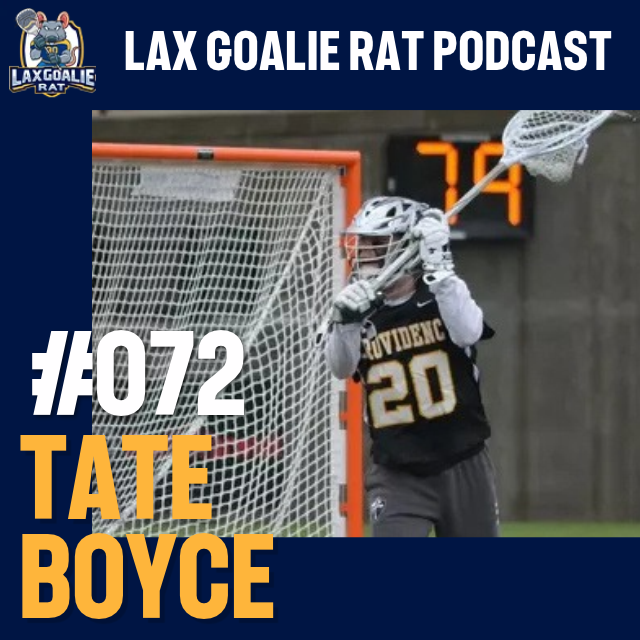
In Episode 72 of the Lax Goalie Rat Podcast, Coach Damon Wilson sits down with Tate Boyce, a professional lacrosse goalie who played at Providence College, competed with the Boston Cannons, and joined the PLL Waterdogs.
Tate shares how he got his start in lacrosse, developed his playing style by studying elite goalies, and learned from legendary goalie coach John Galloway at Providence. He also discusses the importance of athleticism, ball handling, recruiting, and understanding what offensive players are trying to do.
The conversation explores the mental side of goaltending, including how to handle pressure at recruiting showcases, maintain composure after giving up goals, and focus on what you can control. Tate also explains his training routine, his transition from college to professional lacrosse, and how motivation helped him develop throughout his career.
What You'll Learn in This Episode
-
How Tate became a goalie: Why he started playing in fourth grade and how his size and athletic background helped him find his position.
-
Learning through observation: How watching John Galloway, Brett Queener, Brian Dougherty, Kip Turner, and other goalies helped Tate develop his own style.
-
Building an athletic and aggressive style: Why quickness, ball handling, clearing ability, and making plays outside the crease can make a goalie more valuable.
-
Understanding offensive players: How playing other positions and studying shooters helped Tate anticipate shots and recognise offensive tendencies.
-
Improving through coaching: What Tate learned from John Galloway at Providence, including footwork, positioning, technique, leadership, and attention to detail.
-
Navigating the college recruiting process: How to stand out to coaches, communicate proactively, and demonstrate value beyond stopping shots.
-
Handling pressure at showcases: Why goalies should focus on their effort and energy instead of worrying about statistics, other players, or which coaches are watching.
-
Training for explosive movement: How Tate structures his off-season workouts around lower-body strength, single-leg exercises, forearm strength, grip, and explosive power.
-
Breaking down weaknesses: How to identify the cause of a problem with a particular shot and improve it by working on individual movements before putting everything together.
-
Developing mental toughness: Why body language, composure, accountability, and leadership matter after giving up a goal.
-
Creating a reset routine: How simple actions, such as taking a deep breath and using a consistent physical cue, can help a goalie move on after a mistake.
-
Transitioning to professional lacrosse: What Tate learned from playing with the Boston Cannons and joining the PLL Waterdogs, including the faster pace and added challenge of the two-point line.
-
Learning from shooters: How observing players' shoulders, hands, hips, and eyes can reveal their intentions and help goalies become more patient.
-
Choosing the right college programme: Why playing opportunities, team culture, development, and personal fit deserve consideration alongside a school's reputation.
-
Developing a personal playing style: Why every goalie is different and how focusing on individual strengths can lead to improvement.
Key Takeaways
-
Focus on what you can control. Your effort, preparation, energy, and willingness to improve matter more than rankings, statistics, or comparisons with other goalies.
-
Develop a complete game. Shot stopping is essential, but clearing, ball handling, communication, and defensive leadership can help you stand out.
-
Study the game beyond the crease. Learn how offensive players move, read their body language, and understand what they are trying to accomplish.
-
Build skills progressively. Master the fundamentals before adding more complex movements. When something goes wrong, identify the cause and work on the smallest pieces first.
-
Use your athleticism. Explosive footwork, strong hands, grip strength, and quick reactions can help you make saves and contribute beyond the goal.
-
Stay composed after goals. Your teammates feed off your body language. Keep your composure, take responsibility, and avoid blaming others.
-
Create a reset routine. A simple, repeatable sequence can help you mentally move on from a goal or mistake and prepare for the next play.
-
Learn from different perspectives. Coaches, teammates, shooters, and game footage can all teach you something valuable about the position.
-
Choose a college that fits your goals. Consider where you can develop, compete for playing time, contribute to the programme, and enjoy your overall college experience.
-
Let motivation fuel your work. Use setbacks and doubts from others as motivation to improve, rather than allowing them to distract you.
-
Play to help your team win. Instead of chasing individual awards or save statistics, focus on doing whatever you can to contribute to the team's success.
-
Develop your own style. Learn from great goalies, but recognise that there is no single correct way to play the position.
About Tate Boyce
Tate Boyce is a lacrosse goalie originally from Matthews, North Carolina. He attended the McCallie School in Chattanooga, Tennessee, before playing four years at Providence College in Rhode Island.
At Providence, Tate developed under the guidance of John Galloway and later Matt Francis. He earned First Team All-Big East honours throughout his collegiate career, was named Big East Goalie of the Year twice, and earned All-American recognition.
After college, Tate played professionally with the Boston Cannons before joining the PLL Waterdogs. His approach to goaltending combines athleticism, aggressive play, strong ball-handling skills, and a detailed understanding of offensive strategy.
Tate also values sharing his knowledge with younger goalies, encouraging them to reach out, study the position, and take advantage of the resources available to help them improve.
Resources and People Mentioned
-
Lax Goalie Rat Academy: https://laxgoalierat.com/goal
-
John Galloway: Former Syracuse goalie and Tate's coach at Providence College.
-
Matt Francis: Providence coach who continued helping Tate develop his understanding of the goalie position.
-
Troy Kemp: Tate's coach at the McCallie School.
-
Sean Quirk: Boston Cannons head coach who helped Tate learn about professional goaltending and leadership.
-
Coach Copeland: PLL Waterdogs coach who brought Tate into the programme.
-
Goalie Smith: Lacrosse goalie training resources mentioned during the conversation.
-
Jack Starr: Yale goalie whose reset routine presentation was discussed.
-
Tate Boyce on social media:
-
Instagram: @TateVoice
-
Twitter: @the_great_tate
Tate's Goalie Equipment and Stick Setup
Tate shares details about the stick setup he uses:
-
Head: STX Eclipse II
-
Shaft: 30-inch STX shaft
-
Mesh: East Coast Dyes semi-soft Hero Mesh
-
Diamond pattern: 12-diamond
-
Shooting strings: Two U-shaped shooting strings and a nylon at the top
He explains that he likes the feel of this setup when releasing the ball and believes the two U-shaped strings help with rebound control by directing the ball towards the centre of the pocket.
Final Thoughts
Tate Boyce's journey highlights the value of curiosity, hard work, and continuous improvement. From studying elite goalies on YouTube to learning from John Galloway and competing professionally, he built his game by taking advantage of every opportunity to learn.
For goalies working towards the next level, the biggest lesson is to focus on what you can control. Build your fundamentals, understand the game, develop your own style, and stay composed when things do not go your way.
Your goal is not to play exactly like someone else. It is to become the best version of yourself and do whatever you can to help your team win.
Thanks for listening to the Lax Goalie Rat Podcast!