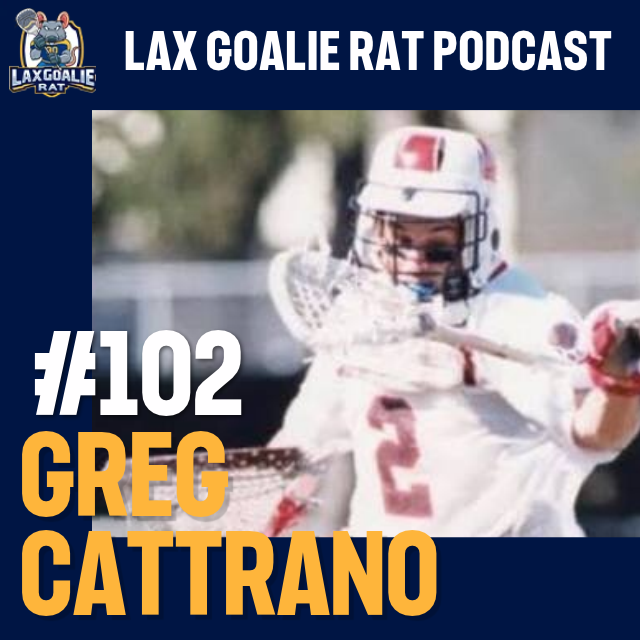
Greg “The Cat” Catrano on Aggressive Goaltending, Mental Toughness, and Bouncing Back from Adversity
Episode Overview
In Episode 102 of the Lax Goalie Rat Podcast, Coach Damon Wilson sits down with Greg “The Cat” Catrano, one of the most accomplished goaltenders in lacrosse history. Greg shares the story of his journey from youth lacrosse on Long Island to becoming an All-American at Brown University and a championship-winning professional goalie.
Greg's career highlights include winning the Goalie of the Year award during his senior season at Brown in 1997, earning All-American honors twice, and competing in the championship game during each of the first five seasons of Major League Lacrosse. He also played in the National Lacrosse League and helped lead the Philadelphia Barrage from a 1-11 season in 2003 to a championship in 2004.
Throughout the conversation, Greg explains how he developed his aggressive approach to goaltending, why mental toughness matters more than making every save, and how goalies can learn to handle failure without losing confidence. He also shares lessons from his college career, professional championships, and experience coaching the next generation of goalies.
What You'll Learn in This Episode
-
How Greg got started in goal at just eight years old
-
How backyard sessions with his older brother helped develop his aggressive mindset
-
Why goalies need to attack the ball instead of letting the ball play them
-
How repetition and focus help reduce fear and improve reaction time
-
Why getting scored on is an essential part of becoming a successful goalie
-
How to respond when you're benched or struggling during a season
-
Why supporting your team and staying ready matter when you're not the starter
-
How Greg developed his playing style and approach to positioning
-
What he learned from competing at Brown University and in professional lacrosse
-
How the Philadelphia Barrage turned a losing season into a championship run
-
Why goalies must maintain positive body language after allowing a goal
-
How Greg teaches mental toughness to the goalies he coaches
-
How lessons from lacrosse translate into leadership and professional life
Episode Highlights
1. From a Backyard Challenge to an Aggressive Goalie Mindset
Greg's first experience in goal came when his father needed a goalie for a youth game. He earned a shutout in his first appearance, although he couldn't remember whether he actually made any saves.
His older brother then became one of his earliest and toughest training partners. Their backyard sessions challenged Greg to keep improving and helped him develop a competitive, aggressive mindset.
Greg credits those experiences with shaping the way he approached the position throughout his career. He learned to face the ball rather than back away from it.
2. Attack the Ball, Don't Wait for It
One of Greg's biggest lessons is that goalies should actively attack the ball rather than passively wait for it to arrive.
He describes keeping his hands extended away from his body and leading with his hands as he moves toward the shot. His feet follow his hands, allowing his body to move through the save and get behind the ball.
Greg explains that this approach worked for him because of his athleticism and mindset, while recognizing that different goalies may have different styles. The important thing is to understand your own game and practise your movements consistently.
3. Overcoming Fear Through Repetition and Focus
For young goalies who are afraid of getting hit, Greg recommends consistent exposure to shots and learning to focus on the ball.
He believes that the more often goalies see shots, the more familiar those shots become. By watching the ball closely, goalies can improve their ability to track it and react naturally.
Greg also points out that goaltending requires an extraordinary level of concentration. Maintaining focus throughout an entire practice or game is mentally exhausting, but it is a critical part of performing consistently.
4. Learning From Setbacks at Brown University
Greg's college career included a difficult period when he lost the starting position during his sophomore season. Rather than becoming discouraged, he focused on supporting his teammates, continuing to work hard, and staying prepared for another opportunity.
That opportunity came during an Ivy League championship game against Cornell. When the starting goalie was taken out, Greg entered the game and delivered one of the best performances of his college career. He even scored the game-winning goal.
The experience taught him that setbacks do not have to define a season. How you respond to adversity can shape what happens next.
5. The Most Important Skill in Goaltending: Handling Goals Against
Greg shares a lesson he teaches at goalie camps and clinics: the most important part of goaltending is learning how to handle getting scored on.
No goalie will save every shot. Even the best goalies allow goals, have difficult games, and experience periods when things don't go their way.
Greg encourages goalies to accept that reality before stepping into the cage. Instead of becoming frustrated or losing confidence, they must reset and prepare for the next shot.
6. Building a Consistent Post-Goal Routine
Greg explains the routine he uses after allowing a goal:
-
Retrieve the ball from the goal.
-
Hand it to the official.
-
Bring the defense together.
-
Encourage the team to focus on the next shot.
This routine helps him reset mentally while showing his teammates that he remains composed and confident. It also sends a message to the opposing team that a goal against him will not shake his confidence.
7. Turning a Losing Season Into a Championship
One of Greg's most memorable professional experiences came after he moved to the Philadelphia Barrage. The team had finished the previous season with a 1-11 record, but the players believed they could turn things around.
Despite a difficult start to the season, the team stayed positive, trusted its preparation, and continued working together. The Barrage eventually won the championship in 2004.
Greg's takeaway is that teams must remain committed even when results are not immediate. Players should honestly evaluate their own effort, learn from setbacks, and continue contributing to the group.
8. Coaching Goalies Through the Mental Game
When Greg works with goalies, he places particular emphasis on mental toughness. He recognizes that every goalie has different physical attributes, strengths, and preferred techniques.
Rather than expecting everyone to play exactly like him, Greg focuses on helping goalies understand their own style while developing the mindset needed to handle adversity.
His central message is simple: you will allow goals, and you must learn to respond positively when that happens. Technique matters, but the ability to recover mentally is what helps goalies keep competing.
9. Applying Goalie Lessons to Everyday Life
Greg is now the vice president of sales for a paddle sports company. He explains how the lessons he learned through lacrosse continue to influence his professional life.
Competition, perseverance, teamwork, and leadership all carry over into the workplace. He believes that successful teams support one another, solve problems together, and focus on shared results rather than blaming individuals when something goes wrong.
The same mindset applies to goaltending: learn from mistakes, support your teammates, and keep moving forward.
Greg Catrano's Advice for Goalies
Greg leaves listeners with a powerful reminder:
Keep working hard, keep your head up, and face adversity. It's okay to fail and it's okay to allow goals. What matters is how you respond and whether you're ready to face the next shot.
Whether you're a youth goalie learning the fundamentals, a high school player working toward the next level, or an experienced goalie trying to become more consistent, Greg's message is to stay focused, remain positive, and keep improving.
About the Lax Goalie Rat Podcast
The Lax Goalie Rat Podcast, hosted by Coach Damon Wilson, is dedicated to lacrosse goalies, their parents, and coaches. Each episode explores the techniques, training habits, experiences, and mental approaches that help goalies perform at their best.