Episode Summary
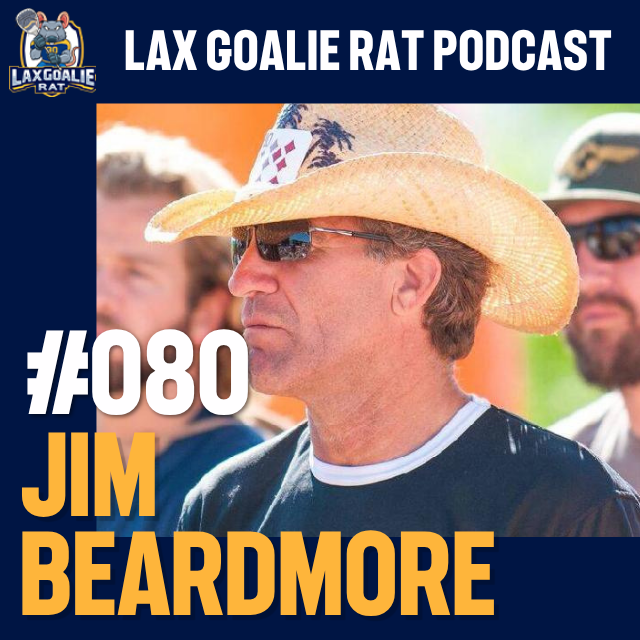
This week on the Lax Goalie Rat Podcast, Coach Damon sits down with one of the most decorated goalies in Maryland lacrosse history, Jim Beardmore.
A former National Goalie of the Year, All-American, ACC Player of the Year, professional player, coach, and lifelong student of the game, Beardmore shares lessons from growing up in a legendary lacrosse family, playing at Maryland, coaching championship teams, and developing the mindset required to become an elite goalie.
The conversation goes far beyond saves and techniques. Jim discusses leadership, confidence, accountability, preparation, coaching philosophy, and the life lessons lacrosse can teach both on and off the field.
This is an episode packed with old-school lacrosse wisdom and powerful lessons for goalies of every level.
In This Episode
- Growing up as the son of legendary coach Buddy Beardmore
- Why sports were such an important part of his childhood
- Learning multiple positions before becoming a goalie
- The value of lacrosse IQ
- Becoming an active, athletic goalie
- Playing at the University of Maryland
- The evolution of goalie technique
- Why confidence starts with preparation
- Leadership lessons for young goalies
- Coaching state championship teams
- Stories from the "Don't Be Normal" documentary
- The meaning of "Be the Best"
- Overcoming adversity and rebuilding life after difficult struggles
- Using sports to help guide young athletes
Growing Up in the Beardmore Household
Sports were part of everyday life for Jim Beardmore.
His father, Buddy Beardmore, was one of the most influential coaches in lacrosse history, while his mother was deeply involved in fitness and athletics.
Whether it was lacrosse, football, basketball, swimming, diving, skiing, or outdoor activities, physical activity was always encouraged.
Looking back, Jim credits his parents for teaching him an important lesson:
Taking care of your body matters.
That foundation would shape his athletic career for decades.
Learning Every Position
Before becoming a full-time goalie, Beardmore played:
- Attack
- Midfield
- Defense
- Faceoff
- Goalie
His belief:
Every young goalie should experience multiple positions before specializing.
Benefits include:
- Higher lacrosse IQ
- Better understanding of offensive concepts
- Improved defensive communication
- Better passing and clearing
- Stronger overall understanding of the game
As a goalie, understanding how every position thinks makes you a better field general.
Why He Loved Playing Goalie
One thing that stands out when watching old Beardmore highlights is how active he was.
He wasn't just stopping shots.
He was:
- Chasing ground balls
- Intercepting passes
- Starting clears
- Riding aggressively
- Leaving the crease to make plays
His philosophy was simple:
A goalie shouldn't just make saves. A goalie should affect the entire game.
The Importance of Communication
At Maryland, Beardmore viewed the goalie position as an extension of the coaching staff.
He described a great goalie as:
"Like having a coach on the field."
The responsibilities included:
- Organizing the defense
- Communicating slide packages
- Reading offensive sets
- Making smart clearing decisions
- Leading through action and communication
He emphasized that winning defenses are built on communication.
Be the Best
One of the recurring themes throughout the conversation is the Beardmore family philosophy:
"Be the Best."
For Jim, this phrase goes much deeper than winning games.
His definition:
Being the best means making everyone around you better.
Whether you're:
- A goalie
- A teammate
- A coach
- A student
- A professional
The goal is the same.
Your actions should positively impact the people around you.
As he explains:
"Your actions affect others."
That lesson applies equally to sports and life.
Don't Be Normal
Beardmore also discusses the title of his documentary:
Don't Be Normal
The message isn't about being flashy.
It's about refusing to settle for mediocrity.
Examples include:
- Making smart decisions
- Avoiding careless mistakes
- Preparing harder than others
- Thinking critically
- Constantly improving
His belief:
Successful athletes are willing to push beyond what is considered normal.
Confidence Comes From Preparation
One of the strongest goalie lessons in the episode centers around confidence.
When young goalies say:
"I don't have confidence."
Beardmore's answer is direct:
"Confidence isn't something you have. Confidence is something you create."
How do you create it?
Through preparation.
That means:
- Wall ball
- Repetitions
- Weight training
- Quickness work
- Save training
- Film study
- Consistent effort
When you've done the work, confidence becomes natural.
Every Shot Can Be Saved
Another great mentality tip from Beardmore:
"You can save every shot that's ever taken on you."
That doesn't mean you actually will.
It means you must believe you can.
Elite goalies enter games expecting success.
They don't look at a shooter and think:
"I hope I stop this."
They think:
"I'm going to stop this."
That mindset changes everything.
Leadership Lessons for Goalies
When discussing leadership, Beardmore emphasized several important habits.
Lead by Example
- Be first to work
- Stay after practice
- Show up prepared
- Give consistent effort
Stay Positive
Negative thoughts spread quickly.
Great leaders bring energy, confidence, and solutions.
Never Blame
Goalies who blame teammates lose credibility.
Strong leaders own mistakes and continue working.
Control Emotion
Emotion is good.
Uncontrolled emotion is not.
Play with passion, but maintain control.
Coaching Philosophy
Throughout his coaching career, Beardmore has learned one lesson above all others:
Keep teaching.
Even during frustrating moments, the coach's role is to educate and help players improve.
He described one moment when his father reminded him:
"You need to coach better."
That lesson stuck with him.
Coaches don't simply demand execution.
They teach it.
Game Day Mindset
Few people love game day more than Jim Beardmore.
For him, the game is the reward for all the preparation.
The training.
The conditioning.
The practices.
The film study.
All of it leads to that moment when the whistle blows.
As he explains:
"You only spend a small percentage of your time actually playing the sport you love."
That's why preparation is so important.
Lessons Beyond Lacrosse
One of the most powerful parts of the episode comes near the end.
Beardmore openly discusses personal struggles with addiction, legal troubles, homelessness, and rebuilding his life.
Today, he works to help:
- Student-athletes
- Young adults
- People in recovery
His message is that talent alone isn't enough.
Athletes must learn:
- Discipline
- Decision-making
- Accountability
- Self-awareness
The same habits that create successful lacrosse players create successful people.