Episode Summary
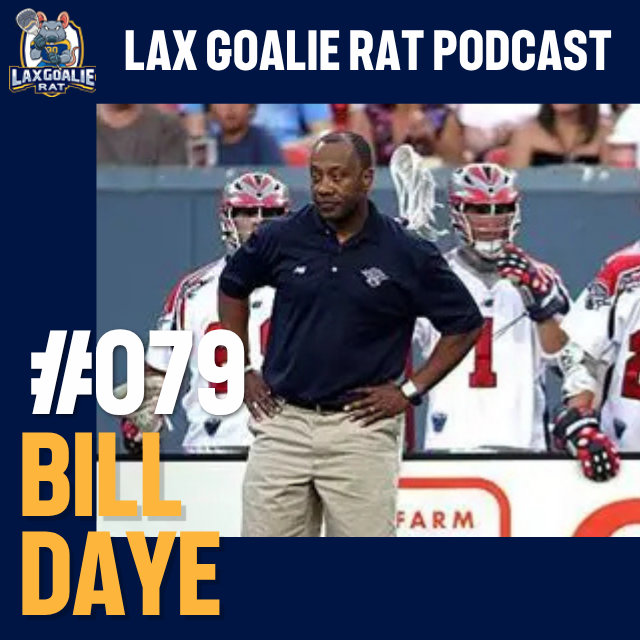
This week on the Lax Goalie Rat Podcast, Coach Damon sits down with former UNC standout goalie, MLL player, and former Boston Cannons head coach Billy Day.
Growing up on Long Island before starring at the University of North Carolina and eventually coaching at the professional level, Billy has seen the goalie position from every angle—as a player, coach, mentor, and leader.
In this conversation, Billy shares lessons on developing confidence, handling adversity, building leadership skills, coaching goalies, adapting to the modern game, and growing diversity within lacrosse.
Whether you're a youth goalie just getting started or a veteran netminder looking to sharpen your game, there is a ton of wisdom packed into this episode.
In This Episode
- How street hockey led Billy to the goalie position
- Why young goalies should wear extra padding
- Growing up in a Long Island lacrosse hotbed
- Learning goalie through instinct and repetition
- Transitioning from high school to Division I lacrosse
- What separates elite goalies at higher levels
- Developing confidence as a goalie
- Leadership and communication in the crease
- Handling slumps and bad games
- Adapting goalie coaching techniques over time
- The importance of consistency
- Surviving a career-ending neck injury at UNC
- Coaching professional goalies in Major League Lacrosse
- Growing racial diversity within lacrosse
- Why every goalie should focus on having fun
How Billy Became a Goalie
Unlike many elite goalies who start young, Billy didn't make the switch until ninth grade.
His background?
Street hockey.
Growing up on Long Island, he spent countless hours playing goalie in neighborhood street hockey games alongside future lacrosse legend Mark Millon.
When his lacrosse team needed a goalie, the transition felt natural.
His first goalie setup was unforgettable:
- Chest protector
- Arm pads
- Football pants
- Thigh pads
- Shin guards
- Volleyball knee pads
- Everything imaginable
His advice for youth goalies today:
"Pad up your goalies."
Why Young Goalies Should Wear More Protection
One of Billy's strongest coaching beliefs is simple:
Don't let fear drive kids away from the position.
Young shooters often have little control over where the ball goes.
As Billy points out:
"The ball doesn't tickle."
Extra protection helps beginner goalies:
- Build confidence
- Stay comfortable
- Focus on technique
- Enjoy the position
Removing the fear factor early keeps goalies coming back.
Learning the Position
Billy was largely self-taught during his early years.
His development came from:
- Watching games
- Taking shots
- Competing
- Learning through experience
As he moved through high school, showcases like the Empire State Games provided opportunities to test himself against elite competition and gain exposure.
The Jump to Division I
Like many top players, Billy discovered that Division I lacrosse was a completely different level.
The biggest adjustment?
Speed.
At the high school level, there might be a few elite athletes on the field.
At North Carolina:
Everybody was elite.
For goalies, that means:
- Faster shots
- Quicker ball movement
- Better shooters
- Smaller margins for error
The learning curve was steep, but it accelerated his development.
Billy's Goalie Style
Billy describes his playing style as:
Aggressive
He loved leaving the crease.
He treated loose-ball situations almost like a free safety in football.
His philosophy:
If the ball was on the ground near the crease, it belonged to him.
Characteristics of his game included:
- Aggressive arc play
- Explosive movement
- Ground-ball pursuit
- Active clearing
- Physical play outside the crease
His athletic background heavily influenced how he approached the position.
Leadership Starts With Communication
One of Billy's key lessons for goalies:
Learn to communicate.
As a goalie, you're not simply making saves.
You're also:
- Organizing defenses
- Calling commands
- Directing slides
- Reinforcing coaching points
- Serving as an extension of the coaching staff
His recommendation to younger goalies:
Listen carefully to defensive coaches and repeat their messages on the field.
The more effectively you communicate, the easier the position becomes.
Confidence Is Everything
Billy believes confidence is perhaps the most important quality a goalie can develop.
When goalies struggle, he encourages them to:
- Share their perspective
- Talk through challenges
- Focus on growth
- Stay positive
His biggest observation:
Most goalie problems begin between the ears.
When goalies stop doubting themselves and start trusting their training, their performance often improves dramatically.
Handling Slumps
Every goalie goes through rough stretches.
Even professionals.
Billy's advice is straightforward:
"You just gotta fight through it."
When slumps occur:
- Return to fundamentals
- Simplify your game
- Keep working
- Maintain confidence
- Focus on the next play
The key is refusing to let one bad game become two.
Mental Toughness
One of the strongest themes throughout the episode is mental resilience.
For Billy, mental toughness means:
Moving On
You gave up a goal?
Move forward.
You missed a save you should have had?
Move forward.
Dwelling on mistakes hurts both you and your defense.
He explains:
"Stay in the moment."
Great goalies focus on the next shot, not the previous one.
The Energy You Bring Matters
Billy believes goalies set the emotional tone for teams.
When defenders look back at the crease, they want to see:
- Confidence
- Presence
- Leadership
- Positivity
Not frustration.
Not fear.
Not self-pity.
A goalie's energy spreads throughout the defense.
Positive energy creates confidence.
Negative energy creates doubt.
Coaching Philosophy
Over the years, Billy's coaching approach has continued to evolve.
Core Principles
- Footwork matters
- Hand speed matters
- Consistency matters
- Athleticism matters
He also studies modern goalie development closely and continues adapting his methods based on new trends and innovations.
One area where his philosophy has evolved significantly:
Arc Play
Instead of teaching the traditional semicircle arc, Billy now teaches a more direct triangle-based approach that emphasizes:
- Efficient movement
- Fewer steps
- Better angle control
- Faster recovery
A Career-Changing Injury
One of the most dramatic moments discussed in the episode was Billy's devastating neck injury during his senior season at North Carolina.
After colliding with a Johns Hopkins player while pursuing a loose ball, he lost movement temporarily and was eventually diagnosed with a fractured vertebra.
The injury ended his collegiate career.
Remarkably, he returned to the field later in life and continues to stay involved in the sport.
Consistency Wins
When discussing goalies he coached professionally, Billy highlighted one quality above all others:
Consistency.
While highlight saves are exciting, coaches value reliability.
The goalie who consistently performs at a high level often becomes more valuable than the goalie who occasionally plays spectacularly.
Consistency applies to:
- Technique
- Positioning
- Communication
- Preparation
- Performance
Diversity in Lacrosse
Billy also shared thoughtful reflections on being a Black athlete in lacrosse.
He talked about:
- The progress the sport has made
- The importance of visibility
- Expanding access
- Supporting future generations
Organizations throughout the country are helping make lacrosse more accessible, and Billy is encouraged by the increasing diversity he sees at youth, collegiate, and professional levels.
His belief:
The sport belongs to everyone.