Episode Summary
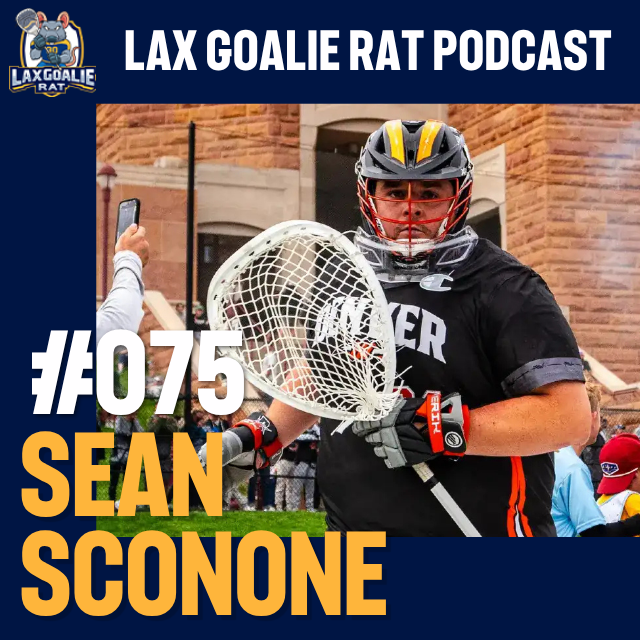
This week on the Lax Goalie Rat Podcast, Coach Damon sits down with former UMass standout and two-time MLL Goalie of the Year winner Sean Sconone.
Few goalies have entered professional lacrosse and made an immediate impact the way Sean did. After earning Goalie of the Year honors at UMass, he followed it up by winning MLL Goalie of the Year in each of his first two professional seasons.
In this conversation, Sean discusses:
- How he became a goalie
- Growing up on Long Island
- His recruiting journey
- The challenges of being a backup
- Mental toughness and resilience
- Life at UMass
- Professional lacrosse
- Coaching young goalies
- His dream of playing for Team USA
This episode is filled with practical advice for young goalies looking to improve both on and off the field.
In This Episode
- Becoming a goalie by accident
- Learning the position through great coaching
- Developing technical fundamentals
- Managing emotions in goal
- Arc play and positioning
- The importance of team culture
- College recruiting advice
- Fighting through adversity
- Earning a starting role
- Training at UMass
- Playing professionally
- Coaching youth goalies
- Mental toughness
- Team USA aspirations
How Sean Became a Goalie
Like many goalies, Sean didn't exactly choose the position.
His father was his youth coach, and when nobody volunteered to play goalie, Sean got the assignment.
As he recalls:
"You're the coach's kid, so you're getting in there."
Initially, Sean split time between:
But after taking a hard shot off the leg and pushing through the pain, his goalie journey officially began.
Eventually he transitioned into a full-time goalie.
Growing Up on Long Island
Sean grew up in East Islip, Long Island, one of the strongest lacrosse communities in the country.
The competitive environment gave him opportunities to:
- Face great shooters
- Learn from quality coaches
- Play against future Division I athletes
By the time he reached college, he had already seen a high level of lacrosse.
Why Young Players Should Play Both Field and Goalie
Sean believes young players benefit from splitting time between positions early on.
Advantages include:
✅ Developing stick skills
✅ Learning offensive concepts
✅ Keeping the game fun
✅ Reducing early burnout
Instead of forcing kids into goal immediately, he likes giving them opportunities to experience both sides of the game.
The Coaches Who Shaped His Career
Two coaches had a major influence on Sean's development:
Tim McAteer
(Current Hofstra Assistant Coach)
Mark Pruitt
Both helped build the foundation of his game.
Their coaching styles complemented each other well.
McAteer
Focused on:
- Technique
- Arc play
- Footwork
- Fundamentals
Sean remembers walking his arc before virtually every training session.
At the time he hated it.
Today he teaches the same drill to his own goalies.
Pruitt
Focused more on:
- Seeing shots
- Learning through reps
- Making adjustments in real time
Together they helped develop a complete goalie.
Learning to Control Emotions
When Sean was younger, his biggest weakness wasn't technique.
It was anger.
Every goal frustrated him.
Eventually coaches helped him realize:
"They're supposed to score sometimes."
That lesson changed his outlook.
Instead of focusing on perfection, he learned to focus on:
- The next save
- Staying composed
- Emotional control
A skill that later became one of his greatest strengths.
Sean's Goalie Style
One of the most interesting topics in the conversation was Sean's unique arc play.
In High School
He primarily used a traditional:
Five-Point Arc
Moving aggressively around the crease.
At UMass
Goalie coach Doc Schneider helped him transition toward more of a:
Three-Point Arc
Rather than moving constantly, Sean learned to:
- Hold his ground
- Use angles
- Pivot efficiently
- Trust his size
This style fit his physical attributes perfectly.
The "Fuzzy Line"
A concept Sean discusses is identifying the:
"Fuzzy line"
when a shooter sweeps down the alley.
The challenge is knowing exactly when to:
- Hold position
- Rotate
- Move toward the pipe
Finding that balance was a major breakthrough in his game.
Why Size Influenced His Style
At approximately:
6'0", 270 pounds
Sean's size allows him to cover significant net space naturally.
Instead of overcommitting to the pipe, he can stay patient and force shooters into difficult decisions.
His approach:
Make the shooter adjust to me.
What He Loves About Playing Goalie
Two things stand out.
Making Big Saves
Especially when the shooter gets frustrated afterward.
Being Part of the Defensive Unit
Sean repeatedly emphasizes how much he enjoys the bond between:
- Goalie
- Defensemen
- Defensive midfielders
The shared accountability and toughness are among his favorite aspects of lacrosse.
Why Team Culture Matters
One lesson Sean learned at UMass was the importance of locker-room culture.
The program had a simple rule:
No Cell Phones in the Locker Room
The result?
Players talked.
They built relationships.
They connected.
And they became a stronger team.
Sean believes many of the best memories happen:
- Before practice
- After practice
- In the locker room
not necessarily during games.
Recruiting Advice for Young Goalies
Sean's biggest message:
Be Patient
Many young goalies become anxious about:
- Recruiting rankings
- Commitments
- Other players committing
His advice:
There's a place for everyone.
Whether that path leads to:
- Division I
- Division II
- Division III
- Club
there are opportunities available for players who continue improving.
Why He Chose UMass
Several things drew Sean to UMass.
Toughness
The team played with a blue-collar mentality that fit his personality.
Culture
Players worked hard and earned everything.
Long Island Connections
Many teammates shared similar backgrounds.
Most importantly:
Nothing was given.
Everything had to be earned.
Life as a Backup
Sean's college career wasn't a straight line.
Freshman Year
Started part of the season.
Sophomore Year
Spent the entire year as a backup.
Junior Year
Started.
Lost the job.
Got another opportunity.
Then never gave it back.
The experience taught him:
- Patience
- Resilience
- Accountability
and ultimately helped shape him into a better goalie.
Mental Toughness Defined
Sean's definition of mental toughness is simple:
"How do you react when things don't go your way?"
Everyone experiences adversity.
Elite athletes respond productively.
Examples include:
- Getting benched
- Giving up goals
- Losing games
- Missing opportunities
Mental toughness is choosing to respond rather than crumble.
UMass Training Routine
Sean credits much of his development to the work he put in outside practice.
Goalie coach Doc Schneider created a weekly development plan.
The schedule included:
Running
Two-mile treadmill runs.
Wall Ball
Regular stick work sessions.
Jump Rope
Footwork and conditioning development.
Hand-Eye Coordination Work
Goalie-specific reaction training.
Extra Goalie Sessions
25-30 minutes before every practice.
The consistency paid off.
Lessons From Professional Lacrosse
Sean's path to the MLL wasn't automatic.
He actually went undrafted.
Eventually, Coach Tim Warner of the Rochester Rattlers gave him an opportunity.
Sean made the most of it.
The result:
Two-Time MLL Goalie of the Year
One of the fastest starts to a professional goalie career in league history.
Leadership Advice
When joining a new team, Sean's philosophy is simple:
Be Yourself
Don't try to be someone else.
Whether you're:
authenticity earns respect.
Players quickly recognize when someone is genuine.
Coaching Young Goalies
Today Sean spends significant time coaching younger players.
What he enjoys most:
Relating To Them
Because he's closer in age than many coaches, players often feel comfortable asking questions about:
- Recruiting
- College lacrosse
- Training
- Life as a goalie
For Sean, coaching is about giving back to the game.
Team USA Goals
Looking ahead, Sean has one major objective:
Team USA
Representing the United States remains his ultimate lacrosse goal.
As he says:
"That would be unreal."