Episode Summary
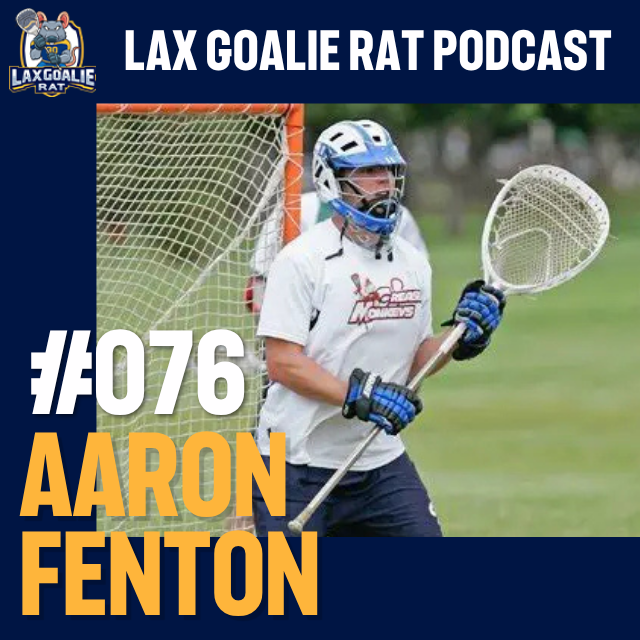
This week on the Lax Goalie Rat Podcast, Coach Damon sits down with former Duke University standout Aaron Fenton, the 2005 National Goalie of the Year and one of the best netminders of his era.
After revisiting the 2005 NCAA Championship game between Duke and Johns Hopkins, Damon tracked down Fenton to discuss his remarkable lacrosse journey. From being forced into goal by his father in fifth grade to becoming one of the elite goalies in college lacrosse, Aaron shares invaluable insights into technique, leadership, mental toughness, training, and what it takes to perform on the biggest stage.
This episode is packed with wisdom for goalies of every age.
In This Episode
- Growing up in Philadelphia lacrosse
- Getting pushed into goal by his father
- Developing as a young goalie
- Why multi-sport athletes make better goalies
- Learning proper goalie fundamentals
- Adjusting to Division I lacrosse
- Reading shooters at elite levels
- Training hand speed and footwork
- Mental toughness and short memory
- Leadership and trust on defense
- Playing for legendary coach Mike Pressler
- Becoming Duke's starting goalie
- Winning 2005 Goalie of the Year honors
- Lessons that translate beyond lacrosse
How Aaron Became a Goalie
Aaron grew up in the Philadelphia area, a region that has long been a lacrosse hotbed.
He started playing lacrosse in second grade, but when his first travel team held tryouts in fifth grade, there was one problem:
Nobody wanted to play goalie.
His father, a former college hockey goalie at Harvard, saw an opportunity.
Aaron remembers:
"He forced me to do it."
Initially, he wasn't thrilled about the position.
In fact, for the first few years, he didn't particularly enjoy it.
But over time, his natural reflexes and growing confidence led him to embrace the role.
Eventually, the position became his identity.
Why Young Athletes Should Play Multiple Sports
One of Aaron's strongest beliefs is that youth athletes should avoid early specialization.
Growing up, he played:
- Soccer
- Basketball
- Lacrosse
And he credits those experiences for helping him become a better goalie.
Benefits included:
Athletic Development
Different sports build different movement patterns.
Leadership Skills
Every team environment teaches communication and teamwork.
Sports IQ
Basketball in particular helped him understand:
- Spacing
- Ball movement
- Two-man games
- Off-ball concepts
His message to parents:
Let kids explore multiple sports before specializing.
Learning the Position
Aaron was fortunate to receive quality goalie instruction early in his career.
As a result:
- He learned sound fundamentals
- He developed strong technique
- He avoided creating bad habits
One of his biggest advantages later in life was that coaches didn't have to completely rebuild his mechanics.
Instead, they could refine them.
Aaron's Goalie Style
Aaron describes himself as a fairly traditional goalie.
Physical Profile
- 5'11"
- Approximately 185-190 pounds
Because he wasn't exceptionally large or exceptionally small, his style focused on:
- Proper angles
- Efficient movement
- Sound positioning
He generally played:
A Medium-to-High Arc
His goal was simple:
Make the cage look smaller.
By stepping out and challenging shooters, he reduced visible net space and forced attackers into difficult shooting decisions.
As Aaron explains:
"The easiest save is the one where the ball just hits you."
The Importance of Angles
One of the major themes throughout the conversation is angle play.
Aaron firmly believes that elite goalie performance starts with proper positioning.
Good angles accomplish several things:
✅ Reduce visible net
✅ Increase save percentage
✅ Force shooting mistakes
✅ Create easier saves
Many of his saves came from simply being in the correct place before the ball left the stick.
Adapting to Division I Lacrosse
The leap from high school to Division I lacrosse was significant.
At Duke, every player was elite.
Every shooter:
- Shot harder
- Released quicker
- Changed angles better
- Placed shots more accurately
The biggest lesson Aaron learned:
You can't wait for the ball to leave the stick.
At the highest levels, reacting isn't enough.
You have to anticipate.
Reading Shooters
Aaron believes one of the most important advanced goalie skills is learning how to read shooters.
That means recognizing:
- Body positioning
- Hand placement
- Shooting angles
- Release points
- Offensive tendencies
The goal is to begin making decisions before the ball leaves the stick.
How does a goalie develop this skill?
Repetition
Thousands and thousands of shots.
The more situations a goalie experiences, the faster pattern recognition develops.
Favorite Training Drills
Aaron shared several unique goalie training methods.
The Sand-Filled Shaft
One of his favorite drills involved filling an old shaft with sand.
The added weight helped strengthen:
Then, after switching back to a normal stick:
Everything felt lightning quick.
Ankle Weights
He would wear ankle weights during warmups.
Benefits:
- Stronger hip flexors
- Better foot speed
- Improved stepping mechanics
The extra resistance forced exaggerated movement toward the ball.
Bare-Hand Ball Catching
Before games, Aaron's goalie coach would warm him up without a stick.
Just bare-handed catches.
Benefits:
✅ Improves hand-eye coordination
✅ Forces aggressive movement
✅ Tracks the ball all the way in
✅ Builds confidence
This became a staple of his pregame routine.
Jump Rope
Aaron was a huge believer in jump rope training.
Jump rope develops:
- Footwork
- Coordination
- Timing
- Endurance
- Explosiveness
He often chose jump rope over additional weightlifting.
Climbing the Depth Chart at Duke
Aaron's college career wasn't easy.
When he arrived at Duke:
He Was Fifth on the Depth Chart
Eventually he moved:
- Fifth
- Fourth
- Third
- Second
- First
The process took years.
Even after climbing the ladder, a freshman started ahead of him early in his junior year.
Many players might have quit.
Aaron stayed patient.
After an opportunity arose, he took advantage and never gave the job back.
Leadership Through Work Ethic
One of the most powerful lessons from the episode comes from Aaron's approach to leadership.
His philosophy:
Lead by example.
Before he was a starter, he built credibility through:
- Hard work
- Positive attitude
- Consistency
- Extra reps
- Team-first behavior
He volunteered for:
- Shooting drills
- Extra work
- Practice reps
His teammates respected him because they watched him earn everything.
Playing for Coach Mike Pressler
Aaron describes former Duke coach Mike Pressler as:
Tough
Both physically and mentally.
Pressler constantly emphasized:
- Mental toughness
- Accountability
- Work ethic
- Resilience
While not every player responded well to that style, those who embraced it often became stronger because of it.
Mental Toughness and Goalie Psychology
One of the best parts of the interview focused on mindset.
Broadcaster Quint Kessenich described Aaron as:
"No highs. No lows."
And Aaron agreed.
His philosophy:
Stay Even-Keeled
Never allow opponents to see:
- Frustration
- Anger
- Excitement
- Panic
Whether a save or a goal:
Same reaction.
Why?
Because emotional stability sends a message:
Nothing affects me.
The Five-Second Rule
Aaron shared a simple rule after allowing goals.
The amount of time he allowed himself to think about a goal:
Five Seconds
Just enough time to:
- Turn around
- Grab the ball
- Toss it to the referee
Then:
Move on.
His mindset:
You don't have to make every save. Just the next one.
Building Trust With Defenders
Aaron emphasized that trust is essential between goalies and defenders.
One rule he never broke:
Never Blame A Defender
Not verbally.
Not physically.
Not with body language.
Instead, after goals he would often tell defenders:
"I should have had it."
Even if the defensive mistake caused the goal.
Why?
Because defenders already know when they make mistakes.
Public blame only damages trust.
Great goalies support their teammates.
Lessons Beyond Lacrosse
Aaron now leads teams in the professional world and believes many of his leadership skills were learned on the lacrosse field.
Lessons that carried over:
- Leadership
- Accountability
- Communication
- Pressure management
- Teamwork
- Trust building
The ability to perform under pressure in championship games translated naturally into business leadership.