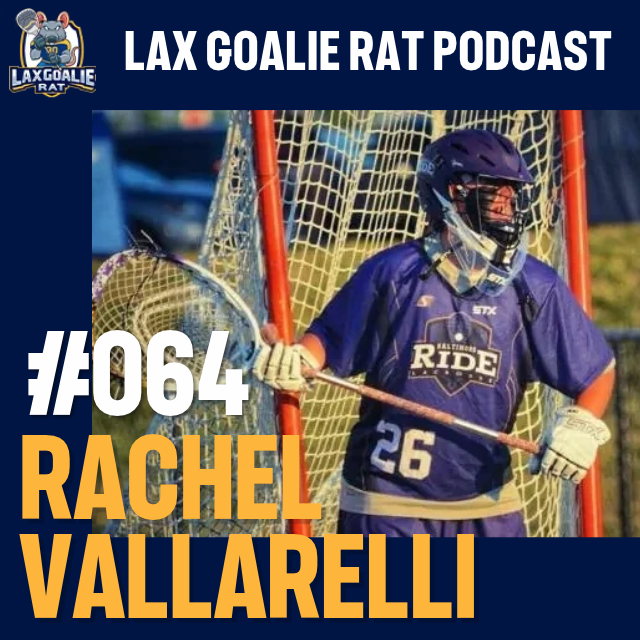
Rachel Vallarelli on Field and Box Lacrosse Goalie Training, Mental Toughness, and Adapting Your Game
Episode Overview
In Episode 64 of the Lax Goalie Rat Podcast, Coach Damon Wilson sits down with Rachel Vallarelli, a professional lacrosse goalie who competes in both women's field lacrosse and men's box lacrosse. Rachel played collegiately at UMass, earned numerous records and accolades, and has been part of the United States national team system since her under-19 days.
Rachel shares her journey from becoming a goalie in seventh grade to competing at the collegiate and professional levels. She discusses how her playing style evolved, why adapting to coaching is essential, and how lessons from box lacrosse have helped her develop as a field goalie.
The conversation also explores practical goalie training techniques, including improving hand speed, using film to prepare mentally, and focusing on fundamentals instead of worrying about every goal allowed during practice. Rachel also shares her experience competing in the men's box game, the importance of surrounding yourself with supportive people, and how goalies can build confidence through preparation, visualization, and consistent hard work.
Whether you're a developing goalie, an experienced player, or a coach working with goalies in either the men's or women's game, this episode offers valuable lessons on skill development, resilience, and reaching your potential.
What You'll Learn in This Episode
-
How Rachel first became a lacrosse goalie and overcame early technical challenges.
-
Why finding the right goalie coach or mentor can accelerate your development.
-
How Rachel adapted her field goalie style as she progressed from high school to college.
-
Why focusing on fundamentals matters more than the number of saves you make during practice.
-
How to develop quicker hands using targeted drills and hand-eye coordination exercises.
-
What playing men's box lacrosse can teach women's field goalies.
-
How to navigate challenges and build confidence when competing in an unfamiliar environment.
-
Why coaches should understand the differences between men's and women's lacrosse while recognising shared goalie fundamentals.
-
How preparation, film study, and visualization build mental toughness.
-
How to reset after allowing a goal and maintain a consistent mindset.
-
Why hard work, self-belief, adaptability, and seeking guidance are essential to long-term development.
Key Takeaways
1. Find the Right Coaching and Mentorship
Rachel explains that she initially struggled to understand how to move efficiently and make saves. Getting the right equipment, taking lessons, and learning from experienced coaches helped her understand the position and improve more effectively.
She encourages goalies to find someone who has experience with the challenges they're facing. A knowledgeable coach or mentor can help shorten the learning curve and provide direction when the next step isn't clear.
2. Adapt Your Playing Style to Your Level
Rachel's goalie style changed significantly throughout her career. A stance that worked well in high school became less effective against stronger collegiate shooters, so she had to adjust her positioning and technique.
Her experience highlights an important lesson: what works at one level may not work at another. Goalies need to stay open to feedback, recognise when a change is necessary, and adapt to the shooters and situations they face.
3. Focus on Fundamentals, Not Just Saves
When learning a new technique, goalies may temporarily allow more goals as they adjust. Rachel stresses that this is part of the process.
Instead of judging a drill by whether the ball goes into the net, focus on executing the correct save movement, getting your hands to the ball first, and moving your feet efficiently. Building strong fundamentals now can lead to better performance later.
4. Let Goalies Explain Their Own Technique
Rachel's coaching approach begins with understanding each player's experience, previous instruction, and goals. She also asks goalies to explain how they play and why they make certain decisions.
Teaching a coach how you approach a situation helps you understand your own technique more deeply. It also makes it easier to recognise when to apply a particular movement or positioning strategy during a game.
5. Train Hand Speed Through Targeted Drills
Rachel shares a favourite drill called the lockout drill, which she learned from Tim McCormick. The drill involves locking out the legs and extending the hands towards different areas of the net, helping goalies practise reaching the ball with their hands first.
She also uses reaction goggles and hand-eye coordination exercises to introduce visual challenges. These exercises help goalies practise responding when they cannot clearly see the ball at every moment.
6. Learn from Both Field and Box Lacrosse
Rachel believes playing box lacrosse can benefit women's field goalies, particularly because both games involve quick reactions and shots from close range.
Box lacrosse has helped her remain composed, wait for the ball's release, and avoid reacting too early to fakes. She also explains that the women's field game features many close-range opportunities, making some of the skills developed in box particularly transferable.
Although the games have different techniques and equipment, goalies can learn from both and incorporate useful elements into their own style.
7. Understand the Differences Between Men's and Women's Lacrosse
Rachel encourages coaches to understand the specific demands of the game they're coaching. Women's lacrosse involves eight-meter shots, close-range opportunities, and different shooting patterns, while men's field lacrosse can feature more outside shots.
She also stresses that the core of goalkeeping remains consistent: see the ball, save the ball, communicate, and help lead the defence. Coaches can draw useful lessons from both games while adapting their training to the players and situations they work with.
8. Surround Yourself with Supportive People
As a woman competing in men's box lacrosse, Rachel encountered challenges related to entering a different environment. She explains that having supportive teammates, coaches, and team staff made a significant difference.
Her advice extends beyond lacrosse. Find people who respect your goals, encourage your development, and help you work towards your ambitions. When others doubt you, remain focused on your work and continue creating opportunities for yourself.
9. Build Mental Toughness Through Preparation
Rachel believes mental toughness comes from knowing you've prepared as well as possible. Extra repetitions, film study, physical training, and practising different scenarios all help goalies feel ready for competition.
Visualization is another important tool. By mentally rehearsing situations they may face, goalies can prepare for difficult moments and respond with greater confidence when those situations occur.
10. Develop a Consistent Response After Allowing a Goal
Rachel shares advice from her goalie coach: act consistently whether you make a save or allow a goal. Rather than reacting emotionally, she retrieves the ball, returns it to the official, refocuses, and communicates with her defence.
She also highlights the importance of trust between goalies and defenders. When everyone understands their responsibilities and believes in one another, the team can recover from setbacks and move forward together.
11. Set Goals and Keep Working
Rachel recommends setting clear goals and working towards them consistently. Improvement comes from daily effort, whether that means physical training, watching film, practising on the field, or strengthening the mental side of the game.
She also reminds goalies that they don't have to figure everything out alone. Asking questions, seeking advice, and remaining open to feedback can help players discover new opportunities and continue improving.
About the Guest
Rachel Vallarelli
Rachel Vallarelli is a professional lacrosse goalie who competes in women's field lacrosse and men's box lacrosse. She played collegiate lacrosse at the University of Massachusetts (UMass), where she earned numerous records and accolades, and entered the United States national team system as an under-19 player in 2010.
In addition to her playing career, Rachel coaches goalies and helps players develop their technique, confidence, and understanding of the position. Her experience across different formats of lacrosse gives her a unique perspective on goalie development and adapting to new challenges.
Resources Mentioned
-
Rachel's Goalie Coaching Business: Visit RV Lacrosse to learn more about her coaching services.
-
Rachel on Social Media: Find her on Instagram and Twitter at @RavsLax26.
-
Lax Goalie Rat Online Camp: Visit LaxGoalieRat.com/goal for goalie drills, workouts, and mental training exercises.
-
Film Study: Review your own performance and study other goalies to identify areas for improvement and prepare for different game situations.
-
Lockout Drill: A hand-speed exercise Rachel learned from Tim McCormick that focuses on extending the hands towards the ball while keeping the legs locked out.
Listen to the Episode
Tune in to Episode 64 of the Lax Goalie Rat Podcast to hear Rachel Vallarelli discuss her journey through field and box lacrosse, the adjustments that shaped her game, and the mental habits that help goalies perform at their best.
Whether you're working towards a starting position, preparing for college lacrosse, or looking to improve as a coach, Rachel's advice is a reminder to stay adaptable, trust the process, and keep putting in the work.
Learn more about Rachel's coaching at RV Lacrosse and explore goalie training resources at LaxGoalieRat.com.