Drake Porter on Goalie Confidence, Recruiting, Positioning, and Defensive Leadership
Episode Overview
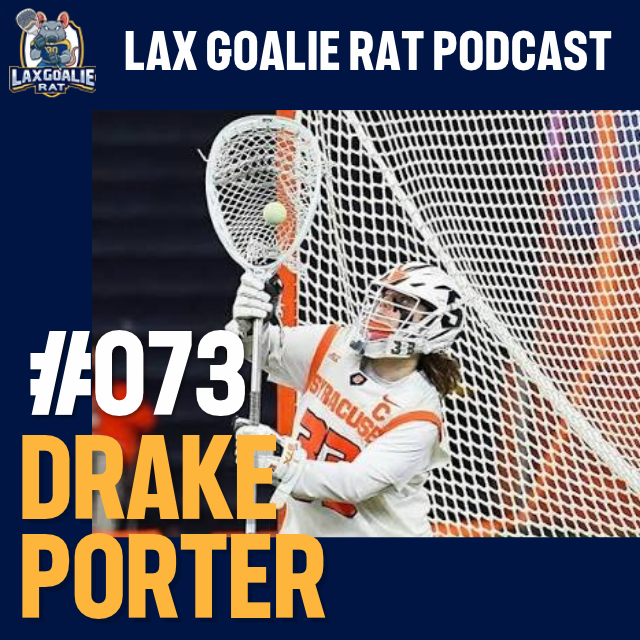
In Episode 73 of the Lax Goalie Rat Podcast, Coach Damon Wilson sits down with Drake Porter, Syracuse University's starting men's lacrosse goalie, to discuss his journey from playing box lacrosse in Canada to becoming the starting goalie for one of the most historic programs in college lacrosse.
Drake shares how he first became a goalie after his middle school team's starter went down, how he developed his skills, and how he learned to overcome setbacks when he realized the competition was much stronger than he expected. He also opens up about his challenging college recruiting journey, the importance of persistence, and how he eventually earned an opportunity to play at his dream school, Syracuse.
Throughout the conversation, Drake breaks down his approach to goalie technique, positioning, mental toughness, and leadership. He explains how he eliminated a hitch in his save movement through repetition, why positioning becomes increasingly important at the college level, and how goalies can lead their defenses through preparation and communication.
Whether you're a young goalie working towards playing college lacrosse or an experienced player looking to improve your game, this episode offers valuable insight into the technical, mental, and leadership skills that help goalies succeed.
What You'll Learn
-
Building confidence as a goalie: How Drake went from believing he was one of the best goalies in his league to facing the reality of stronger competition, and how losing confidence affected his performance.
-
Developing your own goaltending style: Why Drake modelled his game after John Galloway before gradually developing a calmer, more still approach.
-
Improving low-shot technique: How getting his head and body behind the ball helped Drake track low shots and why he is comfortable dropping to his knees when moving laterally.
-
Eliminating bad habits: How repeated low-to-high shooting sessions helped Drake eliminate his tendency to hitch before making a save.
-
Learning from goalie coaches: How attending Bill Pilat's goalie school helped Drake improve his low-shot technique and understand the importance of his bottom hand.
-
Navigating college recruiting: How Drake continued contacting coaches and sending highlight tapes despite receiving little interest, eventually earning an offer from Syracuse.
-
Mastering positioning and angles: Why college shooters' accuracy makes proper positioning essential and how Drake works on staying correctly positioned during sweeps and movement across the field.
-
Training effectively: Why Drake prefers shooting with a stick in his hand over juggling and other hand-eye drills, and how he approaches general fitness and strength training.
-
Learning through film study: How watching college and professional lacrosse helps Drake study goalie positioning, defensive systems, and shooter tendencies.
-
Leading from the crease: Why preparation, understanding defensive schemes, and communicating clearly are essential for goalies who want to lead their teams.
-
Handling pressure and adversity: How Drake managed the nerves surrounding his first start at Syracuse and learned not to judge himself too harshly after difficult performances.
-
Maintaining the right mindset: Why goalies should focus on what they can control rather than judging their performance solely by save percentage or goals allowed.
Key Takeaways
1. Confidence Matters, Even When You're Still Developing
Drake initially believed he was an outstanding goalie because he performed well in his local league. When he began competing against more experienced players, he realized how much he still had to learn. That realization affected his confidence and performance.
His experience highlights the importance of maintaining belief in yourself while recognizing that there is always room to improve. Confidence and technical development need to grow together.
2. Repetition Is Essential for Breaking Bad Habits
Drake struggled with a hitch before making saves, particularly when reacting to high shots. Rather than relying on reminders during regular practices, he spent hours working through low-to-high shooting repetitions with attackman Nate Solomon.
The goal was to remain still before exploding towards the ball in one movement. His experience shows that eliminating ingrained habits takes focused, consistent practice.
3. Persistence Can Open Doors in College Recruiting
Drake's recruiting journey was difficult. While many of his teammates had committed to colleges, he continued reaching out to coaches, attending prospect days, and sending his highlight tape.
His persistence eventually led to opportunities at Loyola, Binghamton, Providence, and Syracuse. His advice to aspiring college goalies is straightforward: keep contacting the programs you're interested in. The worst outcome is being told no, and that leaves you no worse off than before.
4. Proper Positioning Makes Saves Easier
At Syracuse, Drake discovered that college shooters were not necessarily much faster than high school shooters, but they were significantly more accurate. Being slightly out of position could leave him unable to reach the corners.
He improved by incorporating positioning feedback into his daily warm-ups. He asks shooters to tell him when he is out of position, even if he makes the save. This helps him identify mistakes he might not otherwise notice.
5. Goalies Should Focus on What They Can Control
Drake learned an important mental lesson from Canadian box goalie Dylan Ward: a goalie's performance cannot be judged solely by the final score, save percentage, or number of goals allowed.
Some shots are extremely difficult or impossible to stop. Instead of becoming overly positive or negative about individual results, goalies should evaluate their decisions, technique, and effort while recognizing the factors beyond their control.
6. Leadership Starts With Preparation
Drake believes goalies can become stronger leaders by understanding their own defensive systems and studying opposing offenses. From the crease, goalies can see much of the field and recognize problems that defenders may not notice.
Being prepared allows a goalie to communicate confidently, correct defensive positioning, and help teammates understand what is happening on the field. Leadership is not simply about being loud. It comes from knowing what you're talking about.
About Drake Porter
Drake Porter is a Canadian lacrosse goalie who played for Syracuse University, becoming the starting goalie for the Orange. He grew up in Markham, Ontario, where he began playing box lacrosse before discovering field lacrosse in middle school.
Drake's development included learning from influential goalies such as John Galloway and Dylan Ward, as well as improving his technique through specialized goalie training. His journey to Syracuse was not straightforward, but persistence, continued development, and a willingness to keep pursuing opportunities helped him reach his goal.
During the episode, Drake shares his experiences competing at the college level, studying professional goalies, taking on a leadership role within Syracuse's defense, and managing the mental demands of the position.
Follow Drake Porter:
Goalies and Coaches Mentioned
-
John Galloway: Drake's primary field-goalie role model, whose movement, low-shot technique, and approach to the position influenced his style.
-
Dylan Ward: Canadian box goalie who helped Drake develop his mental approach, patience, and ability to manage the pressures of goaltending.
-
Bill Pilat: Goalie coach whose training helped Drake improve his technique on low shots and make a significant jump in his development.
-
Nate Solomon: Attackman who helped Drake work through repetitive shooting drills to eliminate his hitch.
-
Evan Malloy: Former Syracuse goalie who helped Drake understand positioning and angle management at the college level.
-
Desko: Syracuse coach who ultimately offered Drake an opportunity to join the program.
Drake Porter's Goalie Equipment and Stick Setup
Drake shares the following details about his goalie stick setup during the episode:
-
Head: STX Eclipse II
-
Mesh: Jimalax 12-diamond, standard hard mesh
-
Shaft: STX Surgeon side-tie shaft
-
Tape: Shrinking tape
-
Pocket: Tight channel, strung by David Lipka
-
Shooting strings: Two straight shooters and a top nylon
Drake also explains that he positions his top hand directly against the plastic near the throat of the Eclipse II.
Final Thoughts
Drake's journey is a reminder that becoming a successful lacrosse goalie takes more than natural ability. It requires consistent technical work, the confidence to keep improving, persistence through setbacks, and the willingness to take responsibility for leading your defense.
His advice to young goalies is to listen to coaches while also recognizing the value of specialized goalie coaching and the unique demands of the position.
Keep learning, stay persistent, and focus on what you can control.
Learn more about the Lax Goalie Rat Virtual Lacrosse Goalie Summit: GoalieSummit.com
Thanks for listening to the Lax Goalie Rat Podcast with Coach Damon Wilson. Get out there, get some work in, be well, and do well.