
Larry Quinn on Goalie Fundamentals, Mental Toughness, and Winning National Championships
Episode Overview
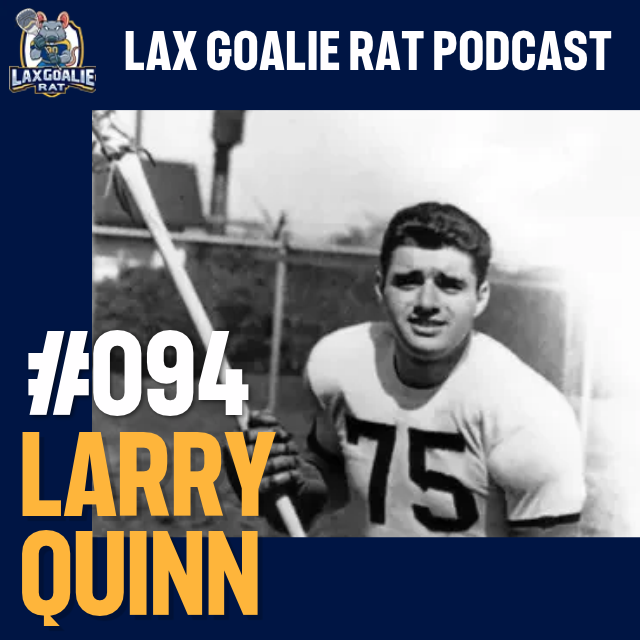
In Episode 94 of the Lax Goalie Rat Podcast, Coach Damon Wilson sits down with Larry Quinn, a Johns Hopkins lacrosse legend, All-American goalie, and member of the National Lacrosse Hall of Fame. Larry shares stories and lessons from an extraordinary career that included two NCAA national championships with Johns Hopkins, three World Championship victories with Team USA, and years of playing and coaching at the highest levels of lacrosse.
Larry played for Johns Hopkins from 1982 to 1985, reaching the NCAA championship game in all four seasons and winning titles in 1984 and 1985. He also represented the United States at the World Championships in 1986, 1990, and 1994. His accomplishments include impressive Johns Hopkins records for single-season and career save percentage.
During this conversation, Larry reflects on how he learned the goalie position, adapted his technique when he reached college, and developed the mental discipline needed to compete consistently. He also breaks down footage from the 1984 national championship game, explaining his positioning, communication, stick preferences, and decision-making.
Whether you're a young goalie learning the fundamentals or an experienced player looking to sharpen your technique and mental game, this episode offers valuable lessons from one of the sport's greats.
What You'll Learn in This Episode
-
Larry's first experience in goal: How he earned his first goalie stick as a young player in Levittown, Long Island.
-
Why simple fundamentals matter: Why learning to see and catch the ball can be more effective than overthinking technique.
-
Learning from Bill Tierney: How the legendary coach influenced Larry's preparation, work ethic, respect for opponents, and approach to competition.
-
Adapting to college-level goalie play: Why Larry had to change his positioning, footwork, and approach when he joined Johns Hopkins.
-
Staying on the pipe: How a costly mistake early in his college career taught him the importance of positioning within the team's defensive system.
-
Handling competition and setbacks: How Larry responded to losing his starting role and used the experience as motivation.
-
Communicating with your defense: Why goalies must direct defenders, call out positioning, and help the defense execute its system.
-
Developing a consistent mental game: Why the next shot matters more than the save or goal that just happened.
-
Improving reaction time and technique: How to work on turns, balance, hand position, and moving efficiently between the pipes.
-
Using your goalie stick effectively: Why Larry preferred a longer, heavier shaft and how it helped with saves, checks, and intercepting passes.
-
Playing ground balls outside the crease: How Larry learned to take advantage of his reach while making smart decisions about when to pursue loose balls.
-
Making accurate outlet passes: How years of stick handling, playing catch, and practicing unsettled situations helped him become an effective clearing goalie.
-
Winning at the highest level: What Larry remembers most about Johns Hopkins' 1984 national championship and his experiences with Team USA.
-
Learning from experience: Why preparation, repetition, and refusing to take opportunities for granted are essential to long-term success.
Larry Quinn's Journey to Johns Hopkins
Larry began playing organized lacrosse at around 10 years old in Levittown, Long Island. During his first goalie tryout, he competed against two other players for the team's only goalie stick. He performed well enough to take the stick home and went on to play goalie for nearly his entire career.
Growing up in a lacrosse community and playing alongside his brothers gave Larry early exposure to the sport. He also benefited from coaching, including instruction from Rick Nash, his first coach.
His development continued at the high school level, where he played under Bill Tierney. Larry credits Tierney not only for his coaching but also for teaching him how to prepare for games, respect opponents, work hard, and approach competition with discipline.
When it came time to choose a college, Larry wanted a strong academic institution where he could compete at the highest level of lacrosse. Johns Hopkins offered the right combination of education, competitive opportunity, and a team environment that felt like a good fit.
Learning to Adapt: From High School to College
One of the biggest adjustments Larry faced at Johns Hopkins was changing his goalie technique.
In high school, he had been taught to bring his feet together and play a more aggressive arc. At Hopkins, goalie coach Jerry Pifer and head coach Henry Ciccarone emphasized keeping his feet apart, maintaining balance, and playing a lower, flatter arc.
The defensive system also required Larry to stay close to the pipe. The defense was designed to push offensive players down the alleys and away from the middle, making it important for the goalie to maintain the correct position and be ready for shots from those areas.
Larry learned this lesson the hard way during an overtime loss when he came off the pipe and was beaten inside. After the game, Ciccarone made it clear that staying on the pipe would have given the team a better chance to win.
From that point forward, Larry became much more disciplined about his positioning.
His experience highlights an important lesson for goalies: technique must work within the defensive system you're playing. Being athletic and making individual saves is important, but positioning, balance, and discipline help turn those abilities into consistent performance.
Overcoming Setbacks and Earning the Starting Role
Larry's path to becoming the starting goalie at Johns Hopkins was not straightforward.
As a freshman, he understood that the coaching staff preferred not to start first-year goalies because of the difficulty of transitioning from high school to college lacrosse. He had opportunities to play, including a playoff appearance in which he helped the team come back from a deficit.
During his sophomore season, the starting position was open for competition. Larry eventually stepped in after the starting goalie was injured, helping the team win several games. However, after a victory over Delaware, the coaching staff returned to the senior goalie.
Larry was frustrated. He believed he had earned the starting job, and the decision affected him emotionally. His goalie coach, Jerry Pifer, encouraged him not to accept the setback passively but to prove the decision wrong.
That advice stayed with him. Larry used the disappointment as motivation, continued working, and became the starting goalie for his junior and senior seasons.
He believes the experience taught him not to take opportunities for granted. Sitting on the sidelines helped him observe the game, understand the defense more deeply, and appreciate how quickly a college lacrosse career passes.
The takeaway: You may not always agree with a coach's decision, but you can control your preparation, effort, and response. Keep working so you're ready when your opportunity comes.
Breaking Down the 1984 National Championship Game
One of the highlights of the episode is Damon and Larry reviewing footage from Johns Hopkins' 1984 NCAA championship victory over Syracuse.
The discussion offers a rare look at how an elite goalie approached the game, from directing defenders to positioning himself for shots.
1. Communicating With Your Defense
Larry explains that when he first arrived at Hopkins, his communication was not as strong as the coaches wanted. Growing up, he had mostly called out the ball's location. At college, he learned that his job was to tell defenders what to do and where to position themselves.
Examples included calling for defenders to step up, get their sticks on an attackman's gloves, and guide offensive players toward areas where the defense could contain them.
The defensive system focused on forcing attackers down the alleys, preventing them from getting topside, and preparing for slides when they rolled inside.
Larry's role was to help defenders maintain proper spacing and positioning, particularly when the ball was behind the goal and defenders could not easily see the entire play.
His communication improved with experience, becoming an important part of his game.
2. Making the Right Turn and Staying on the Pipe
Larry discusses how proper turns and positioning helped him move efficiently across the goal.
When moving from pipe to pipe, goalies must maintain their positioning and be ready to reset for the next shot. On cross-crease passes, Larry was taught that if he committed to reaching for the ball, he still needed to keep turning toward the opposite pipe.
He also explains that even a successful save can involve imperfect technique. During one play, he made a save after reaching across the crease but acknowledged that he had started dropping to his knees too early.
The lesson is to evaluate not only whether a save was made, but also whether the movement and positioning were sound enough to repeat successfully.
3. Using a Longer, Heavier Goalie Stick
Larry preferred a longer, heavier shaft than many goalies use today.
He liked the counterweight it provided when moving the stick toward low shots and bounce shots. He also found the heavier shaft useful when contesting loose balls around the crease and checking opponents.
Another advantage was his ability to intercept passes. Larry felt the longer stick gave him additional reach when trying to disrupt offensive plays.
His preference illustrates how equipment choices can influence a goalie's style. The key is understanding why a particular setup works for you and how it supports the skills you need.
4. Making Saves on Close-Range Shots
Larry describes the satisfaction of stopping an attacker who appears ready to score from close range. Those saves can shift momentum and give the defense renewed confidence.
However, he emphasizes that goalies cannot dwell on either a great save or a goal against. The next shot is always the priority.
He also explains how his height helped him cover space when moving toward low shots, while acknowledging that dropping to his knees too early could limit his ability to react to other shooting locations.
His approach focused on maintaining an effective body position, getting the stick head down toward the ground, and avoiding movements that left him unable to recover.
5. Pursuing Ground Balls and Clearing the Ball
Larry was taught at Johns Hopkins to pursue certain loose balls near the goal line extended or below, rather than always remaining in the crease.
His reach, longer stick, and comfort handling the ball helped him extend his range while maintaining awareness of the risks.
He also became an effective outlet passer through years of playing catch, watching older players, and participating in fast-break and unsettled drills. Because his high school team had a relatively small roster, he often had to help move the ball quickly without having a teammate waiting at midfield.
That experience taught him to make accurate outlet passes into space and get the ball moving before the opposing offense could reset.
The Mental Game: Focus on the Next Shot
Larry believes concentration is one of the most important qualities a goalie can develop.
After making a save or conceding a goal, the previous play no longer matters. The goalie's job is to prepare for the next shot without getting distracted by what just happened.
He follows a philosophy of staying even-keeled, avoiding extreme highs after successful plays and extreme lows after mistakes.
Larry credits goalie coach Jerry Pifer with teaching him the importance of consistency. The goal is to make the saves you should make, avoid giving up bad goals, and give yourself opportunities to make saves that others might not expect.
He also stresses the importance of preparation. Goalies need to be in shape, work hard during warm-ups, and use those limited minutes to focus on the areas that need improvement.
Repeatedly practicing the right movements helps them become second nature. When the game becomes chaotic and there is no time to think, the goalie can rely on those habits.
Building Confidence Through Preparation
Larry's confidence came from years of playing on good teams, learning the fundamentals, and trusting his ability to stop the ball.
He was not necessarily the fastest or strongest athlete, but he knew he could track and catch lacrosse balls. That confidence helped him compete even when he faced challenges or lost his place in the lineup.
He also explains that a goalie must learn to accept that some goals are inevitable. A goal against does not automatically mean the goalie made a mistake. The important thing is to remain consistent and avoid letting one play affect the next.
His advice for developing goalies is to work on the areas where they struggle, correct mistakes, and repeat the right movements until they become automatic.
Playing for Team USA
After graduating from Johns Hopkins in 1985, Larry continued his career with the U.S. National Team, winning World Championships in 1986, 1990, and 1994.
He describes international lacrosse as a different experience because of the rules, playing styles, and opponents from other countries. Competing against Canada, Australia, and England gave him opportunities to adapt to different approaches to the game.
Larry also highlights the exceptional quality of the U.S. team tryouts, where top players competed intensely for a place on the roster.
Playing alongside so many talented athletes helped elevate his game. Although he valued his international achievements, Larry says the college national championships were especially meaningful because they represented the culmination of years of work and the close relationships built with teammates.
Larry Quinn's Coaching Philosophy
Larry later returned to Johns Hopkins as a volunteer assistant and goalie coach, working with players on the same fundamentals that had helped him develop.
His coaching focuses on several key areas:
-
Seeing the ball: The foundation of every save.
-
Body and hand position: Maintaining balance, keeping the hands away from the body, and avoiding unnecessary tension.
-
Turns and pipe-to-pipe movement: Moving efficiently while staying in position.
-
Individual development: Recognizing that every goalie has different strengths and areas to improve.
-
Mental concentration: Forgetting previous saves and goals and focusing on the next shot.
-
Preparation and repetition: Using warm-ups effectively and correcting mistakes before they become habits.
Larry stresses that no two goalies are exactly alike. Some need to improve their body position, while others struggle with hand placement or moving off the pipe. Coaching should address each player's specific needs.
Lessons From Larry Quinn
Larry's career offers several valuable reminders for goalies at every level:
-
Keep the fundamentals simple. See the ball, track it, and make the save.
-
Stay balanced and disciplined. Good positioning helps you make saves consistently.
-
Communicate with your defense. Your job includes helping defenders understand where they need to be.
-
Focus on the next shot. Do not allow a previous save or goal to affect your concentration.
-
Prepare with purpose. Warm-ups are an important opportunity to build confidence and reinforce good habits.
-
Learn from setbacks. Losing a starting role or making a mistake can become motivation to improve.
-
Never take opportunities for granted. College careers move quickly, so make the most of every chance to play.
-
Appreciate your teammates. Goalies help their defenses recover from mistakes, and defenders help goalies by limiting dangerous opportunities.
Larry Quinn's Advice to Young Goalies
If Larry could give his younger self one piece of advice, it would be simple: Never let up.
He reflects on moments when he lost focus and opportunities he wished he had taken better advantage of. Those experiences taught him that success requires consistent effort, even when things are going well.
For young goalies, his message is to stay prepared, keep working, and never assume that a starting role or an opportunity is guaranteed. When your chance comes, make sure you're ready to take advantage of it.
Continue Your Goalie Development
Want to improve your technique, confidence, and mental game? Explore the Lax Goalie Rat Academy for training resources, drills, and practical advice designed to help lacrosse goalies improve.
Visit the Academy: https://laxgoalierat.com/goal


United States