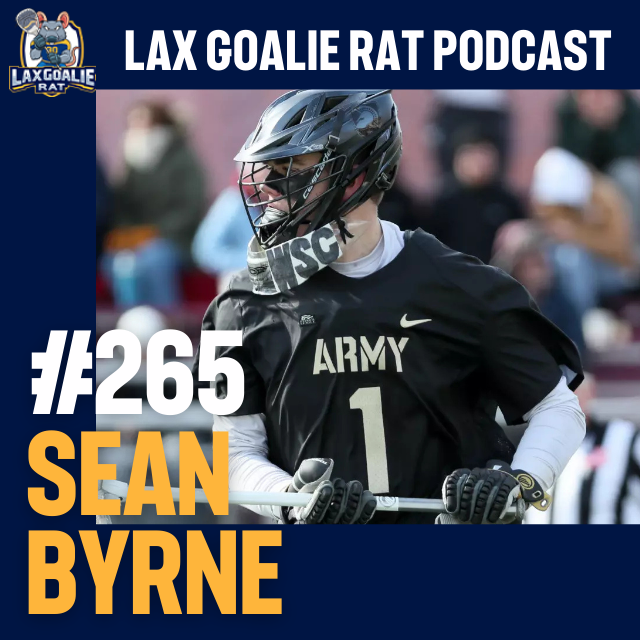
In this episode of the Lax Goalie Rat Podcast, Coach Damon sits down with Army West Point starting goalie Sean Byrne to discuss the mindset, preparation, and relationships behind his success in the cage.
Sean shares how his background as a baseball catcher helped him become comfortable with shots coming toward him and eventually led him to lacrosse goalie. Growing up in Georgia, Sean had fewer goalie-specific resources than players in traditional lacrosse hotbeds, but he continued developing through coaching, camps, film study, and consistent practice.
A major focus of the conversation is Sean’s calm and relaxed approach to the mental game. Rather than becoming overly emotional after allowing a goal, Sean uses a simple reset routine: he turns around, picks up the ball, and hands it back to the official. That small action allows him to accept what happened, move forward, and prepare for the next play.
Sean also explains why goalies should return to their fundamentals during difficult stretches instead of abandoning their normal technique. He discusses learning to trust his stance, positioning, hands, and preparation rather than panicking or completely changing his playing style when things are not going well.
The episode also explores Sean’s recruiting journey from Georgia to West Point, the importance of being a supportive backup, and the lessons he learned from former Army goalies Knox Dent and Matt Chess. Sean emphasizes that every goalie must continue preparing because one opportunity, injury, or change in the lineup can suddenly put the backup into the game.
Sean gives significant credit to the Army defense playing in front of him. He discusses the importance of communication, trust, honest conversations, and self-sacrifice when building a successful defensive unit. Instead of operating as individual players, Army’s defense works together, celebrates the small plays, and takes pride in doing the difficult work that may not appear on a stat sheet.
Sean also shares how sports psychology, faith, prayer, and consistent routines help him remain peaceful in high-pressure situations. His approach shows that goalies do not need to be loud or highly emotional to lead effectively. They must understand their own optimal mindset and discover the style that allows them to perform confidently.